AI that never sees a patient's name
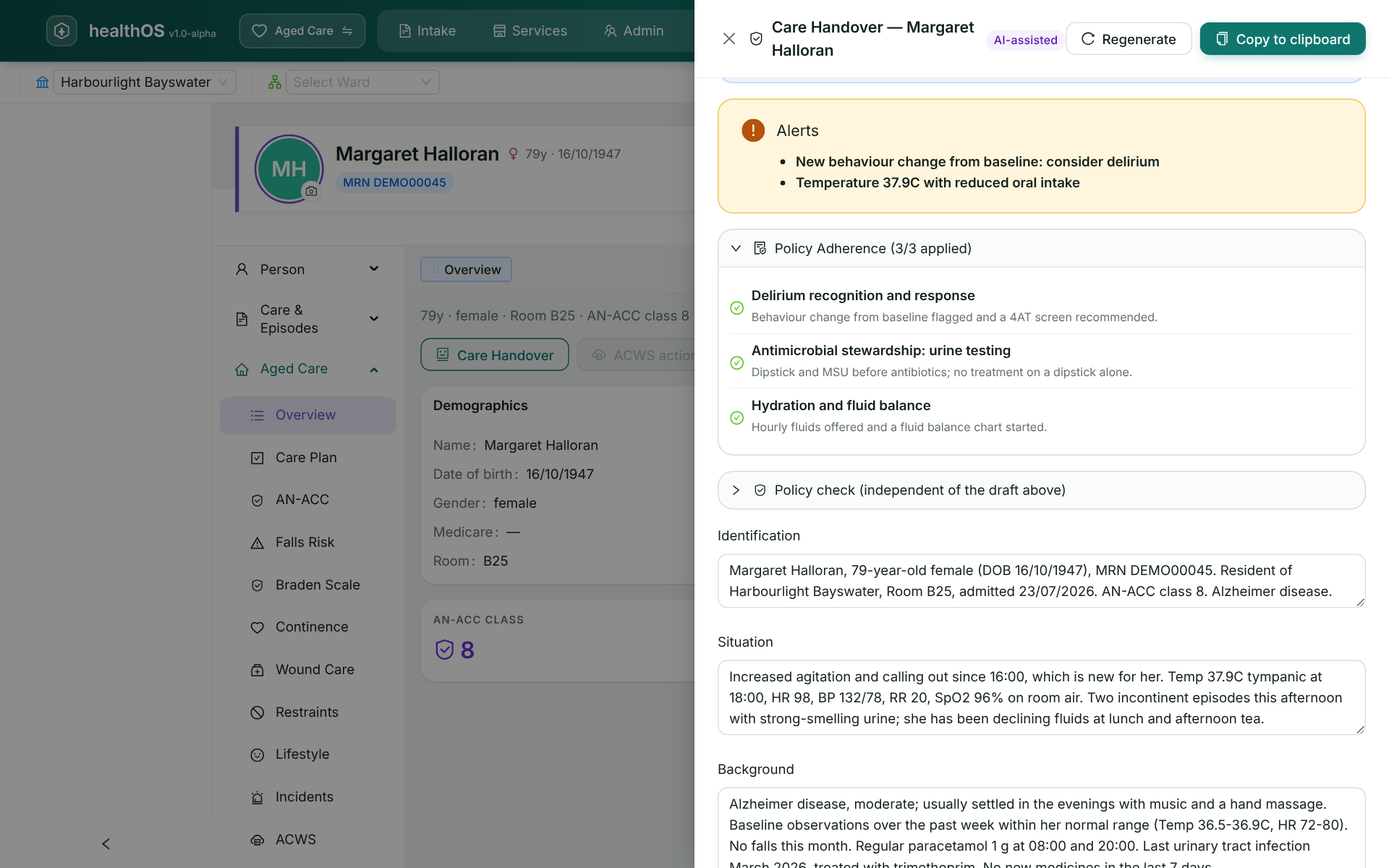
Handover summaries draft themselves from the whole record, ready for the clinician to review and sign. The AI reads one connected, longitudinal record instead of eight disconnected silos, so what it writes is grounded in real data.
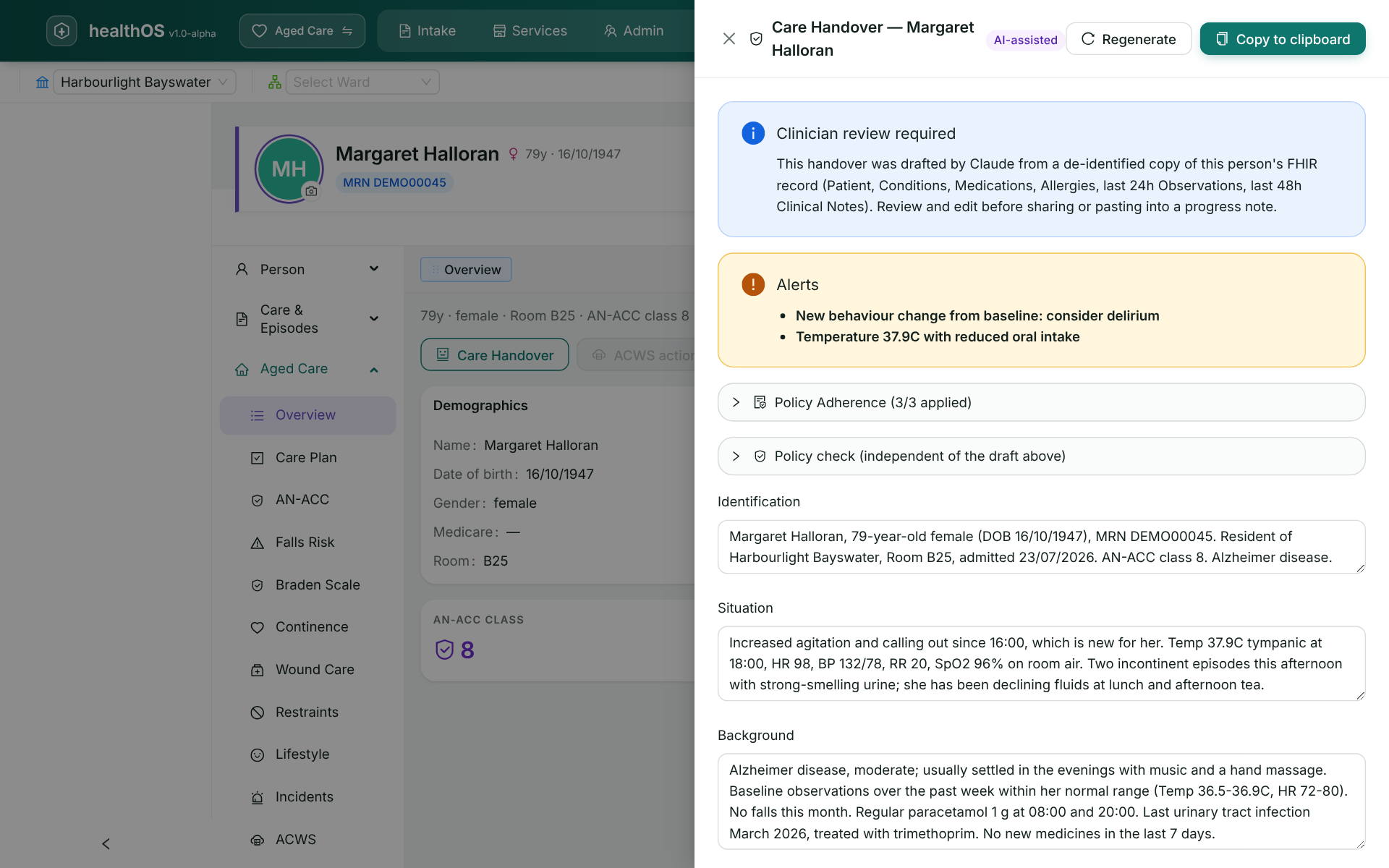
Field worker handover summaries.
Shift handover for residential care.
Participant transfer summaries.
AI that works the way clinical governance demands
Names come out before anything leaves HealthOS
Names, Medicare numbers, dates of birth and addresses are removed before any record leaves HealthOS. Direct identifiers are stripped from structured fields by rule, and known patient identifiers are scrubbed from free-text notes. This is enforced in code, so it holds whatever the policy document says.
- Structured identifiers removed by rule
- Free-text notes scanned for known patient identifiers
- The model processes de-identified clinical content only
From request to signed summary
A clinician requests a handover summary from within the care record. HealthOS pulls the relevant clinical records (progress notes, assessments, medication charts) and strips all personally identifiable information. Each request carries a private token, so the returned summary re-links to the right patient without the model ever seeing who they are. The de-identified record goes to a large language model running in your own cloud account. The summary comes back for the clinician to review, edit or regenerate before release.
- Clinician triggers it from within the care record
- PII removed before the record leaves HealthOS
- The model processes de-identified clinical content only
- Summary returned and linked back to the patient
Sovereign by design
Most healthcare AI products send clinical data to a shared cloud API. HealthOS does the opposite. The model runs inside your own cloud account, and you choose which one: a commercial frontier model or a low-cost open model, whatever your cloud's model catalogue serves. Patient data never leaves your sovereign boundary, your security team controls the keys, and you can change models without changing HealthOS.
- Deployed in your own cloud account
- No shared API and no third-party data access
- Secrets encrypted with a key held in your own Key Vault
- Designed to meet APP and Essential 8 requirements
Built for real clinical workflows
AI handover sits inside the care record your clinicians already use. Shift handover summaries are generated in seconds from the same assessments, progress notes and care plans that staff enter every day. The summary can only be complete because the record is.
- Shift handover summaries for nursing staff
- Clinician reviews and approves before release
Every AI interaction is logged
Each request records what was sent, what was returned, who requested it and when. The log is immutable, so AI use in clinical documentation stays auditable.
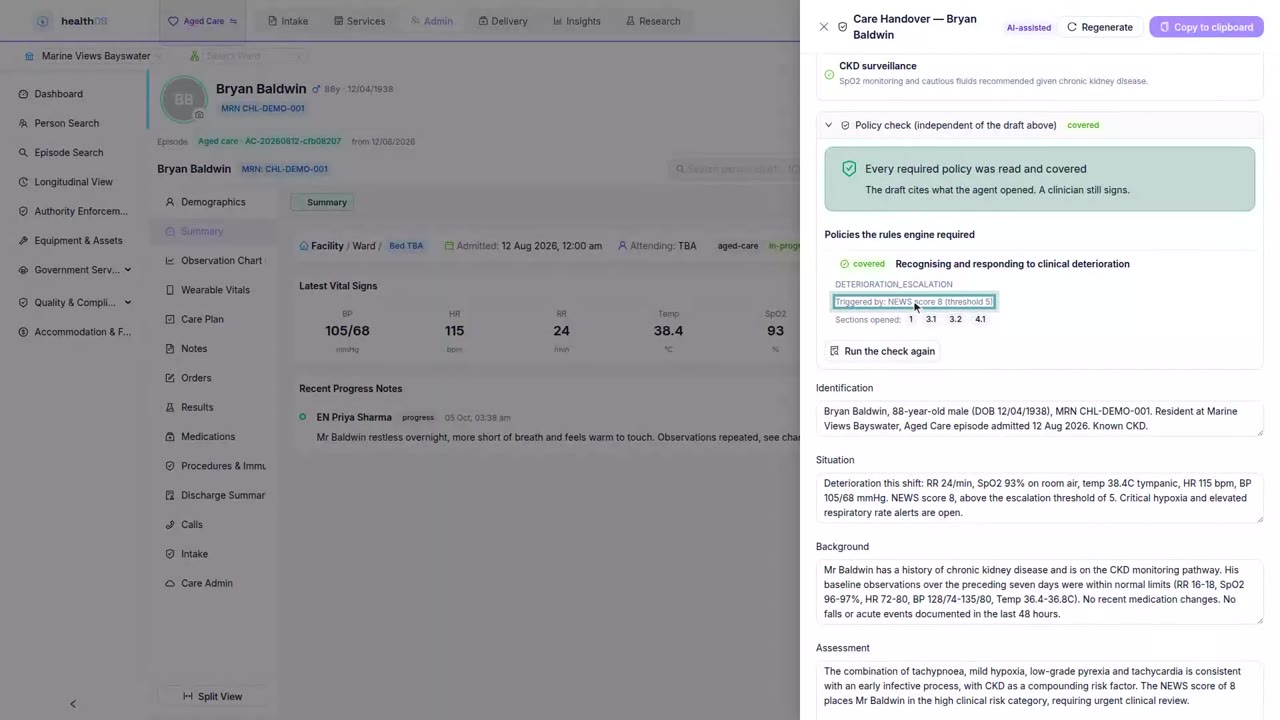
See it in action
 2:01
Related
See AI handover in action
We will walk you through it on real data. Bring questions.