Specialist rooms, from the referral to the Medicare claim
A specialist's week is split between the rooms and the hospital, and so is the paperwork. HealthOS runs the rooms on the same record and the same Medicare claiming as the hospital: book against the referral, see the patient, charge from your fees and lodge the claim, then write to the GP from the same visit.
Follow one patient through a specialist's rooms, from the referral to the letter back to the GP, and into hospital when they need an operation. Each step is a page.
From the referral to the claim, in your rooms
The rooms and the hospital, finally on one record
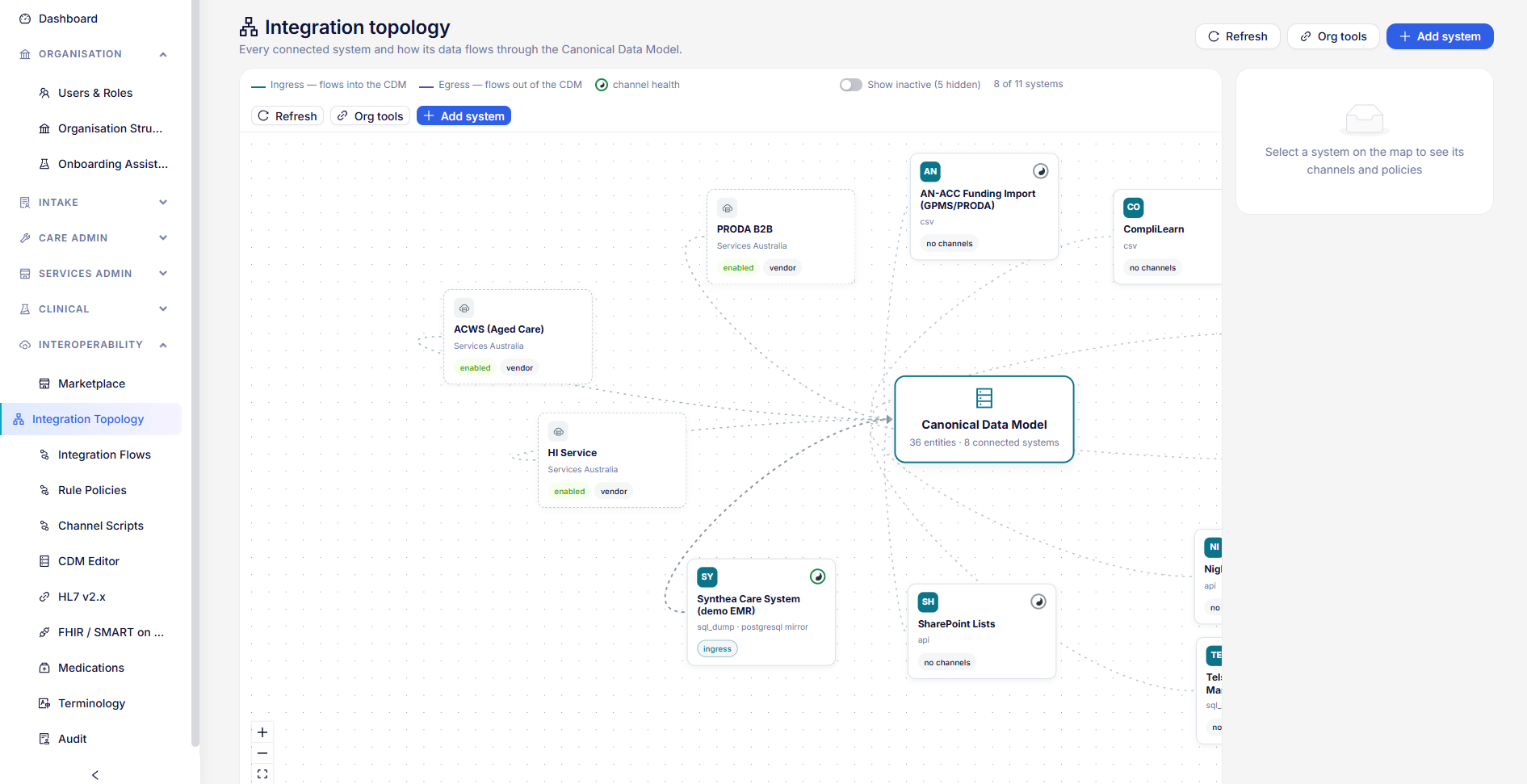
A referral arrives, the front desk books it and keys the patient in. The specialist sees them, the fee is worked out, Medicare is claimed and the GP gets a letter. When the patient needs an operation, the same details are written again for the hospital, and the surgeon's in-hospital claim is built from a theatre record somebody else holds. HealthOS carries the referral, the visit, the claim and the letter on one record, and links the rooms to the hospitals where the specialist operates.
An appointment book built around the referral
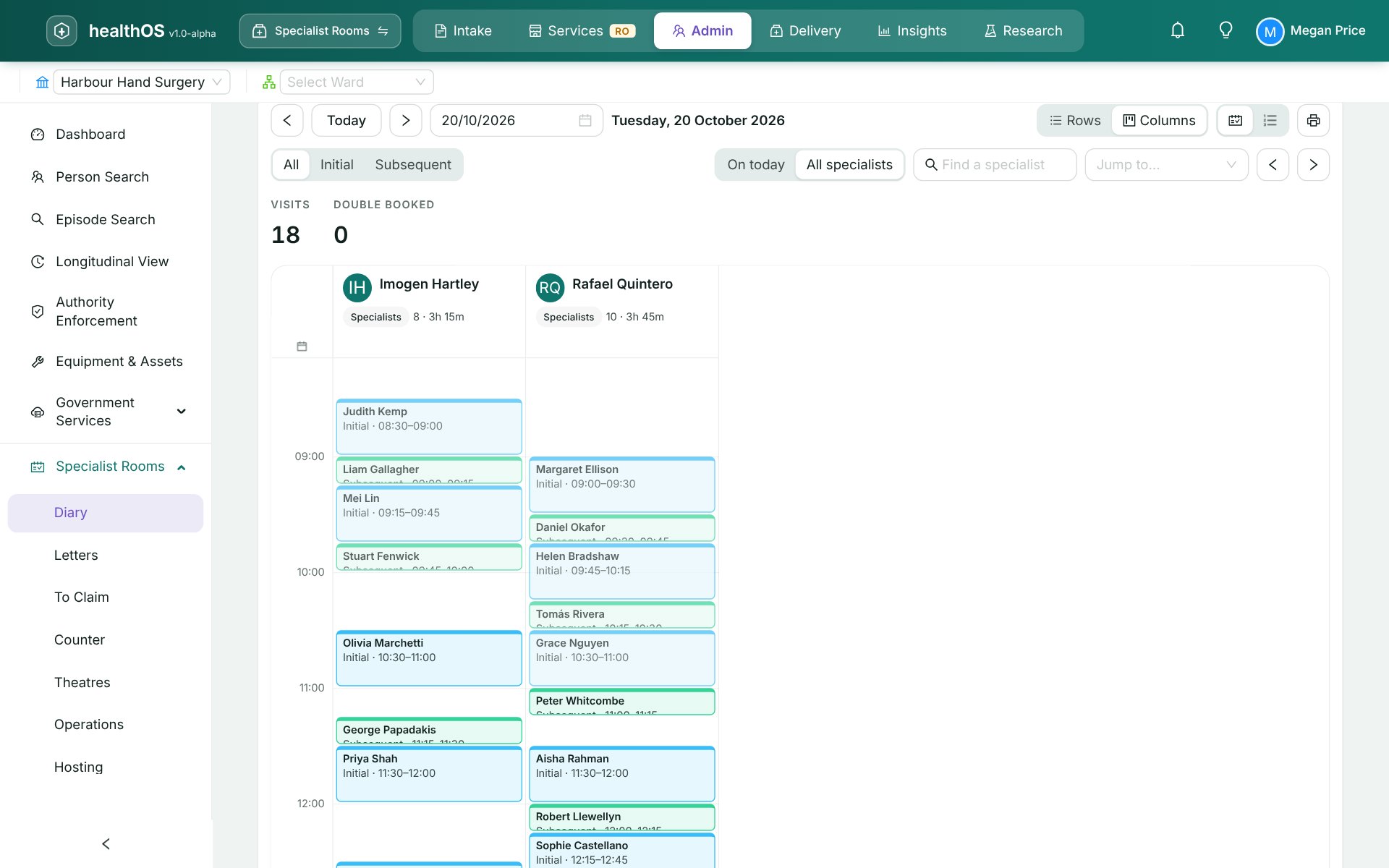
The front desk works from an appointment book with a column for each specialist: click empty time to book, drag to move, click to open. Each booking is made against the patient's referral, with its validity on the day of the visit, so a referral that has run out shows up before the patient arrives rather than when the claim is rejected. Each specialist has their own day view.
- Appointment book per specialist, with a list view beside it
- Referrals arrive in the same inbox as any other, with the referring doctor and validity period recorded once and reused on later visits
- The specialist's own day
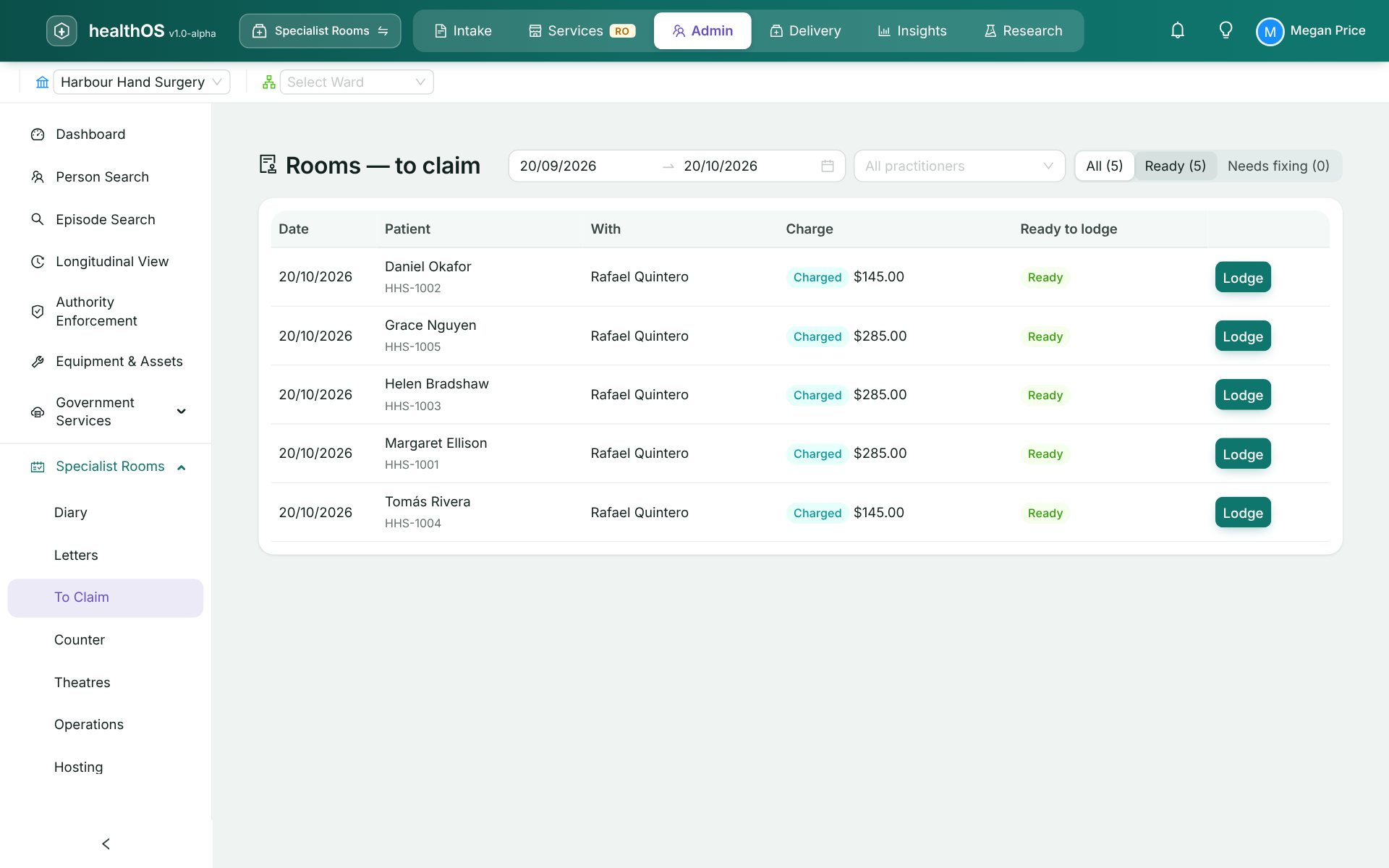
- A to-claim worklist showing every visit not yet claimed, and what is stopping it
Charged from your fees, claimed through Eclipse
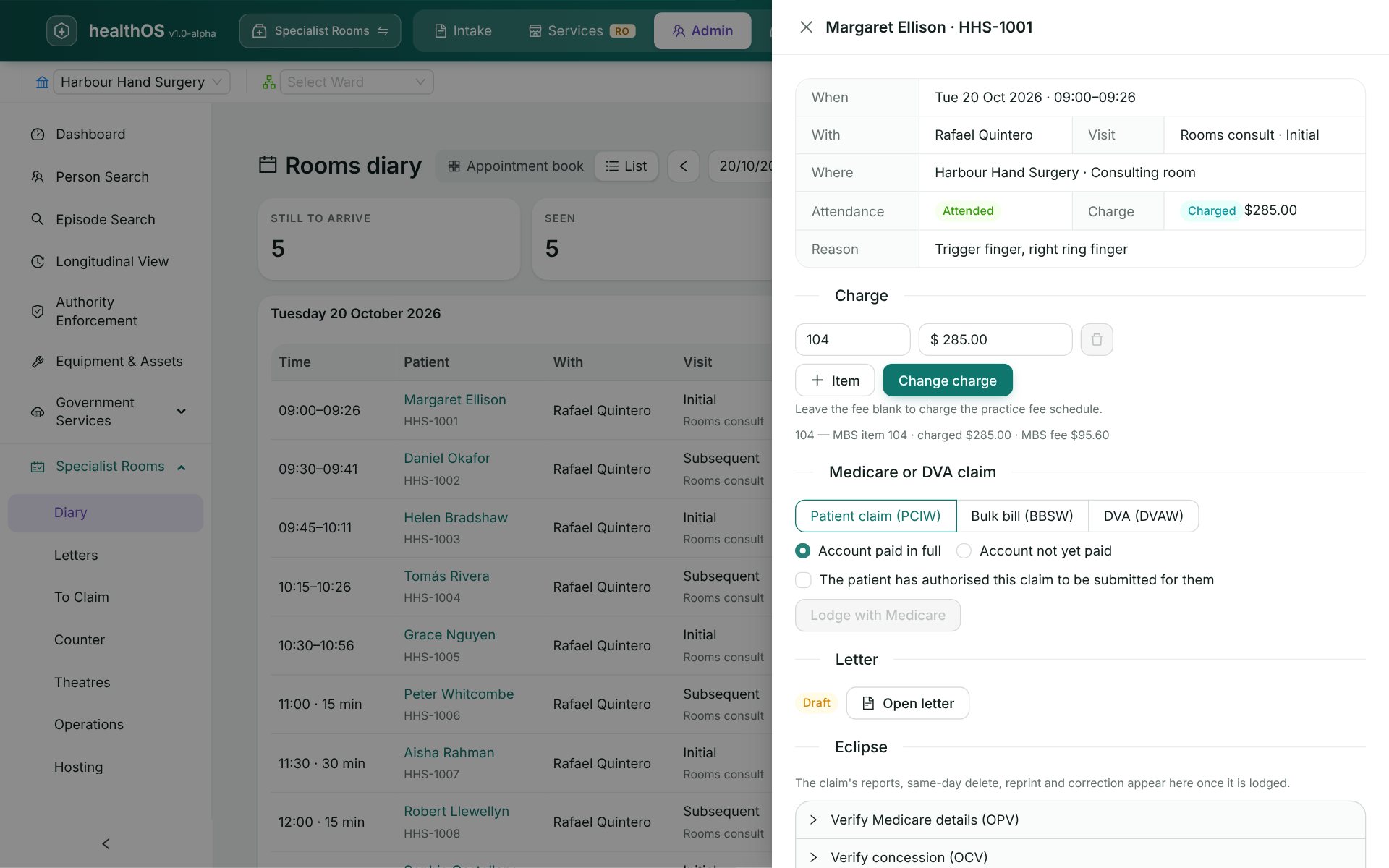
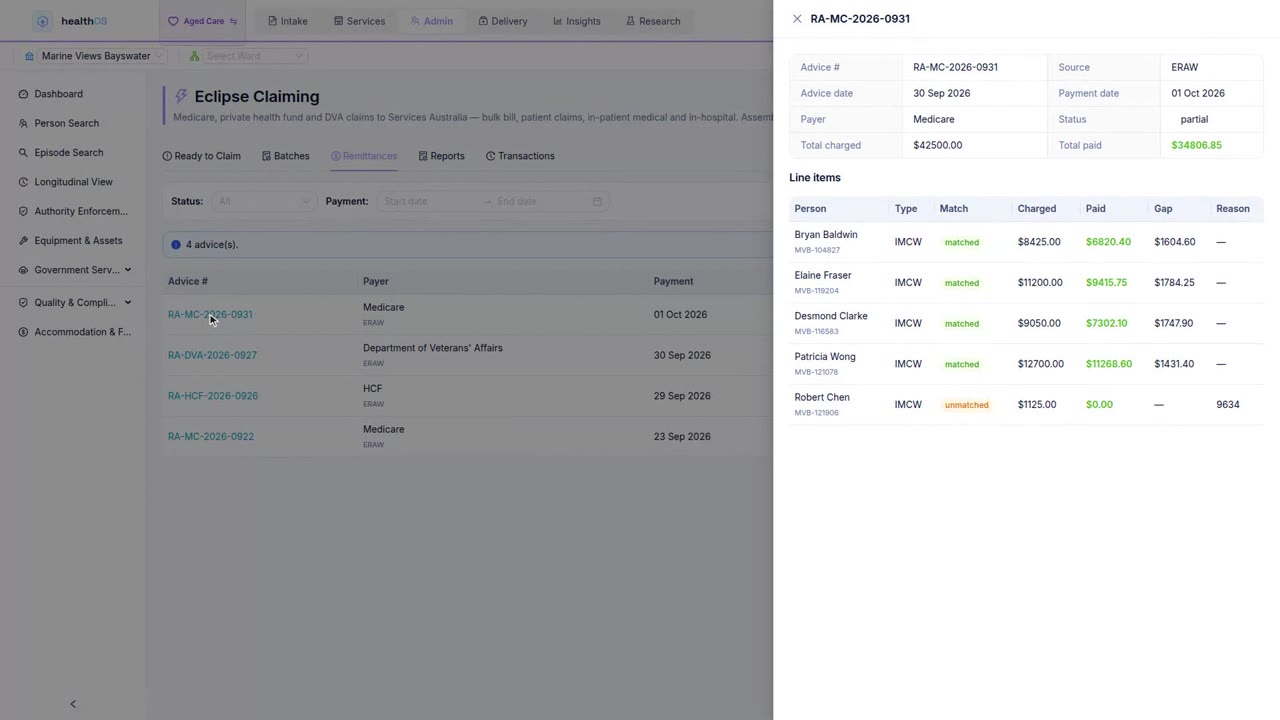
When the patient is seen, the charge comes from the practice's own fee schedule by MBS item, with the schedule fee beside it. The initial or subsequent attendance item is suggested from the referral, and the multiple operation rule sets the expected benefit when several procedures are billed together. Before anything is lodged, the visit shows every reason it is not ready to claim. Patient claims and bulk bill claims go to Medicare through Eclipse, with the patient's agreement asked for and recorded, never assumed. Veterans' claims go to DVA with their card type. Eclipse is in Notice of Integration testing with Services Australia.
- Practice fee schedule by MBS item, loaded from MBS Online
- Patient claims, bulk bill claims and DVA claims
- Patient verification and concession checks from the visit
- Claim status, reports and same-day deletion from the visit
The in-hospital medical claim, without re-keying the operation
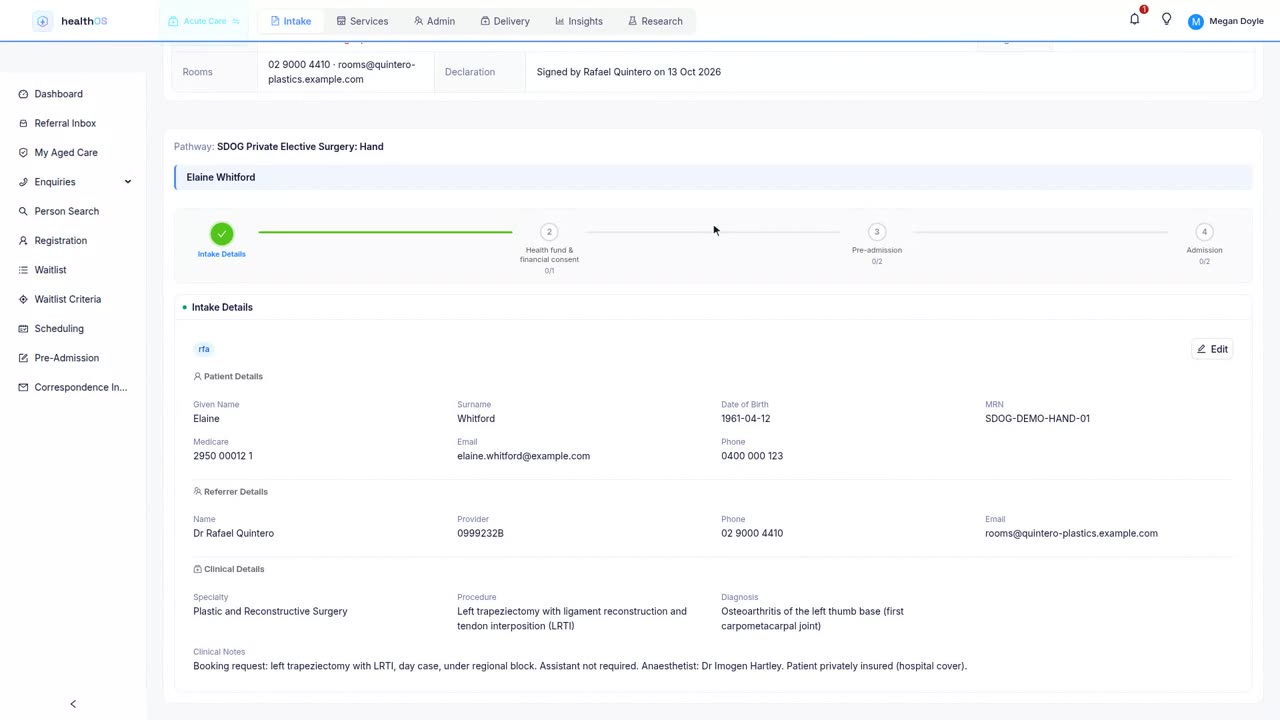
A surgeon's in-hospital medical claim goes to Medicare and the health fund through Eclipse, lodged under the fund arrangement it falls under, with the fund's share billed on its own invoice. When the practice is linked to a hospital that runs HealthOS, each locked operation record for the practice's own patients arrives in the rooms' operations inbox. The front desk matches the patient, and the procedures become a charged in-hospital visit at the practice's fees.
- In-hospital medical claims to Medicare and the fund
- Operation records from linked hospitals, matched in the rooms
- Each procedure charged at the practice's own fee
The patient's account, and the counter
The front desk raises the patient's invoice from the visit, with the expected Medicare benefit printed on it, and Medicare's answer posts to the right share of the account. Payments are taken on an EFTPOS terminal at the counter from the same screen, and refunds need a second person's approval.
- Patient invoices with the expected Medicare benefit shown
- Medicare's payment posted against the claim it pays
- EFTPOS at the counter, with refunds approved by a second person
- Medicare Easyclaim on the terminal: in development
The letter to the GP, written from the visit
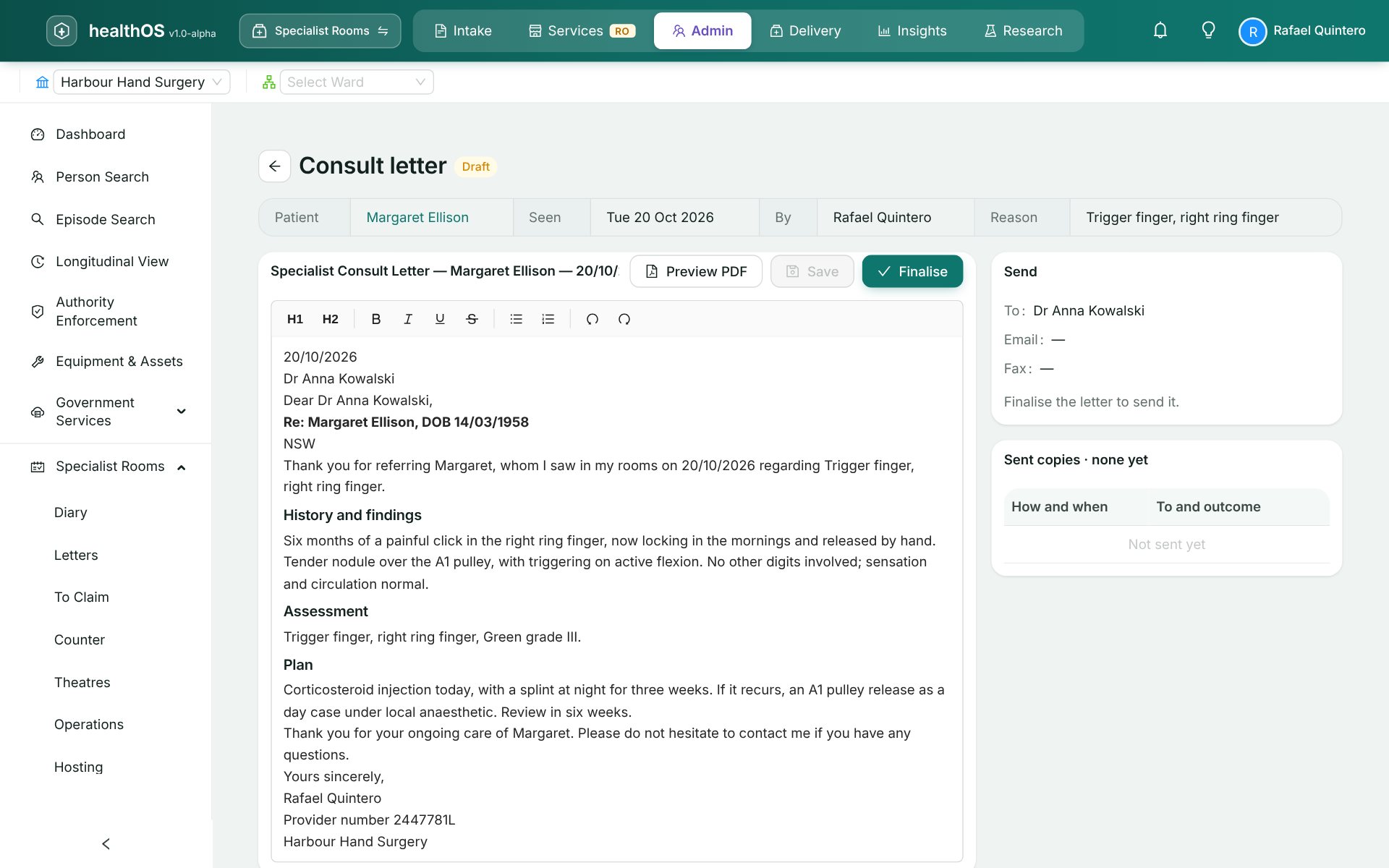
The consult letter is drafted on the visit from the practice's own template, edited by the specialist, and finalised as a PDF. Each copy that leaves the practice is recorded with what was sent, whether it was emailed, printed or faxed. Upload to My Health Record as a specialist letter is built and follows that connection going live.
- Letters drafted from the practice's template on each visit
- Finalised as a PDF and emailed or printed
- A record of every copy sent
- Secure messaging to GPs: in development
Rooms a private hospital can offer its specialists
A private hospital can offer HealthOS rooms to its accredited specialists and have its practice support staff run their front desk. The practice is always its own organisation with its own records. It decides who from the hospital may work in it, sees everyone who can, and can withdraw them. Linked to the hospital, the surgeon sees their theatre lists in the rooms diary, with other surgeons' cases shown only as busy time, and the hospital can give the rooms a link for sending requests for admission straight to its inbox.
- The practice's records stay its own, hosted or not
- Hospital staff work in the practice only with the practice's grant
- Theatre lists from linked hospitals in the surgeon's diary
- Requests for admission sent from the rooms by link
Built-in connectors for specialist rooms
The HI Service, PRODA and Eclipse, with My Health Record in development. See government services.
See it in action
Related
See HealthOS in your rooms
We will walk you through it on real data. Bring the hardest thing your current practice software can't do.