One episode. One hospital team. Paid sooner, with the coding backlog cleared.
- Nothing typed twice. The referral, pre-admission, theatre, the ward, discharge and coding all sit on the patient’s episode.
- No bad debt at the front door. Patients sign their estimate and settle their share before they are admitted.
- Funding known before year end. Every coded episode is priced as the year runs, while there is still time to act.
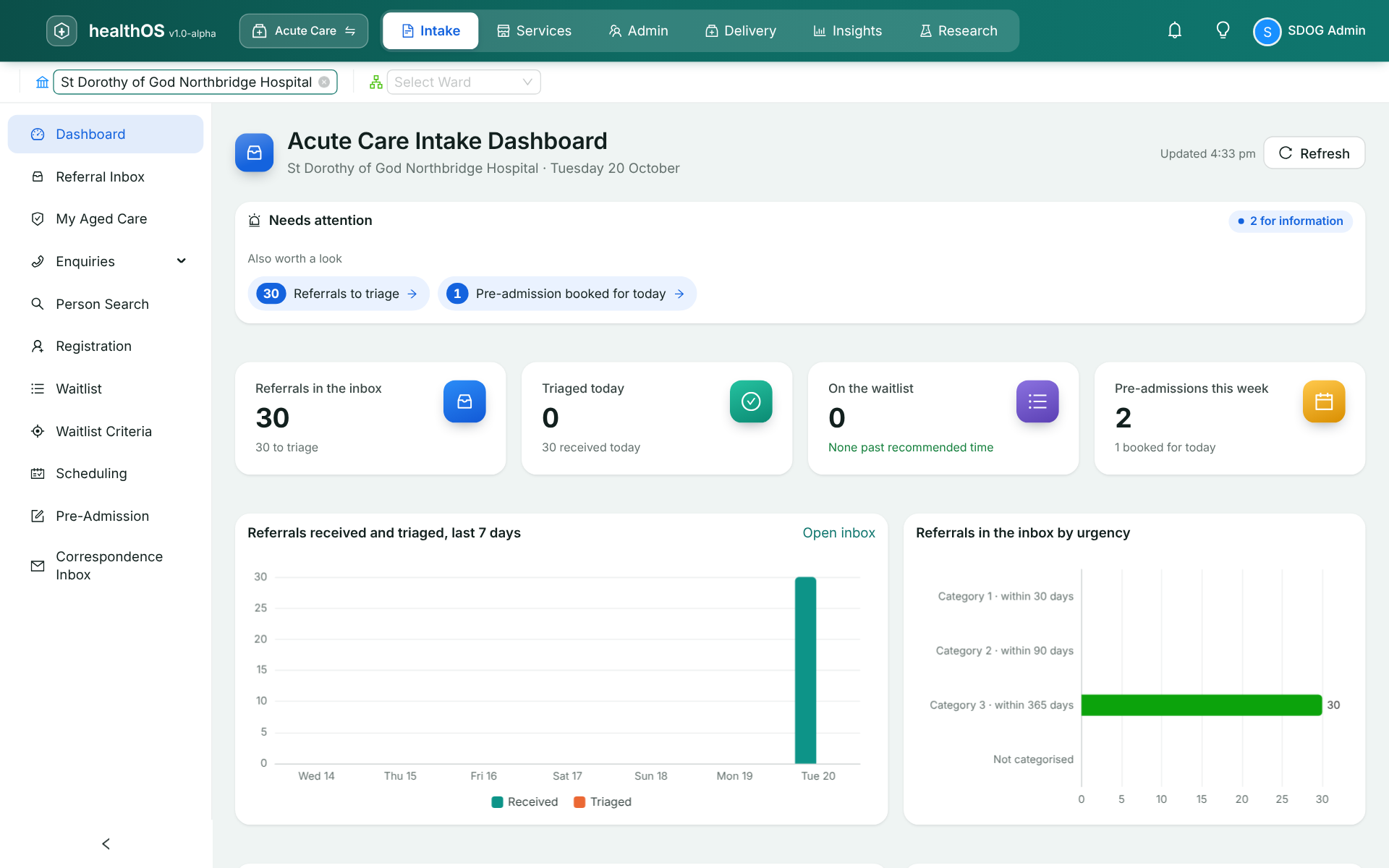
Follow one patient through a private hospital, from the surgeon's request to the claim. Each step is a page: who takes part, what happens and what it hands to the next.
Nothing typed twice, from the surgeon’s request to the claim
A hospital stay passes through admissions, theatre, the ward, coding and billing, and in most hospitals each keeps its own system. On one episode, every step starts from the one before it.
- In separate systemsReferrals arrive by fax, email and phone, each in its own queueOn one episodeEvery referral in one queue, with cover checked before admission
- In separate systemsPaper forms and the estimate on the day of surgeryOn one episodeForms, consent and the patient’s share done from home
- In separate systemsTheatre paperwork filed after the listOn one episodeThe safety checklist, counts and recovery record kept on the episode
- In separate systemsCoders read the whole chart to find what the stay addedOn one episodeCoders start from what the patient arrived with
- In separate systemsThe stay is keyed in again to claim itOn one episodeThe claim builds from the episode already recorded
Admissions, theatre, the ward and coders see the same patient
Each team works its own step and sees what the others have done, so nobody rings around for what is already known.
Lose no more referrals
Email, fax, portal and phone referrals land in a single queue, so none sits forgotten in someone’s inbox. Email referrals are read in automatically through your organisation’s email platform.
- Unified referral inbox
- Email referral parsing
- Triage and priority assignment
- Pre-admission pipeline
Know they’re covered before they’re admitted
Your admissions team verifies the Medicare number, checks Veterans’ Affairs eligibility and looks up the patient’s national health identifier (healthcare identifier) straight from the patient record, before anyone commits a bed.
- Medicare number validation
- Veterans’ Affairs eligibility checking
- Healthcare identifier lookup via the Healthcare Identifiers Service
- Secure government login (Provider Digital Access)
Fewer cases falling over on the day
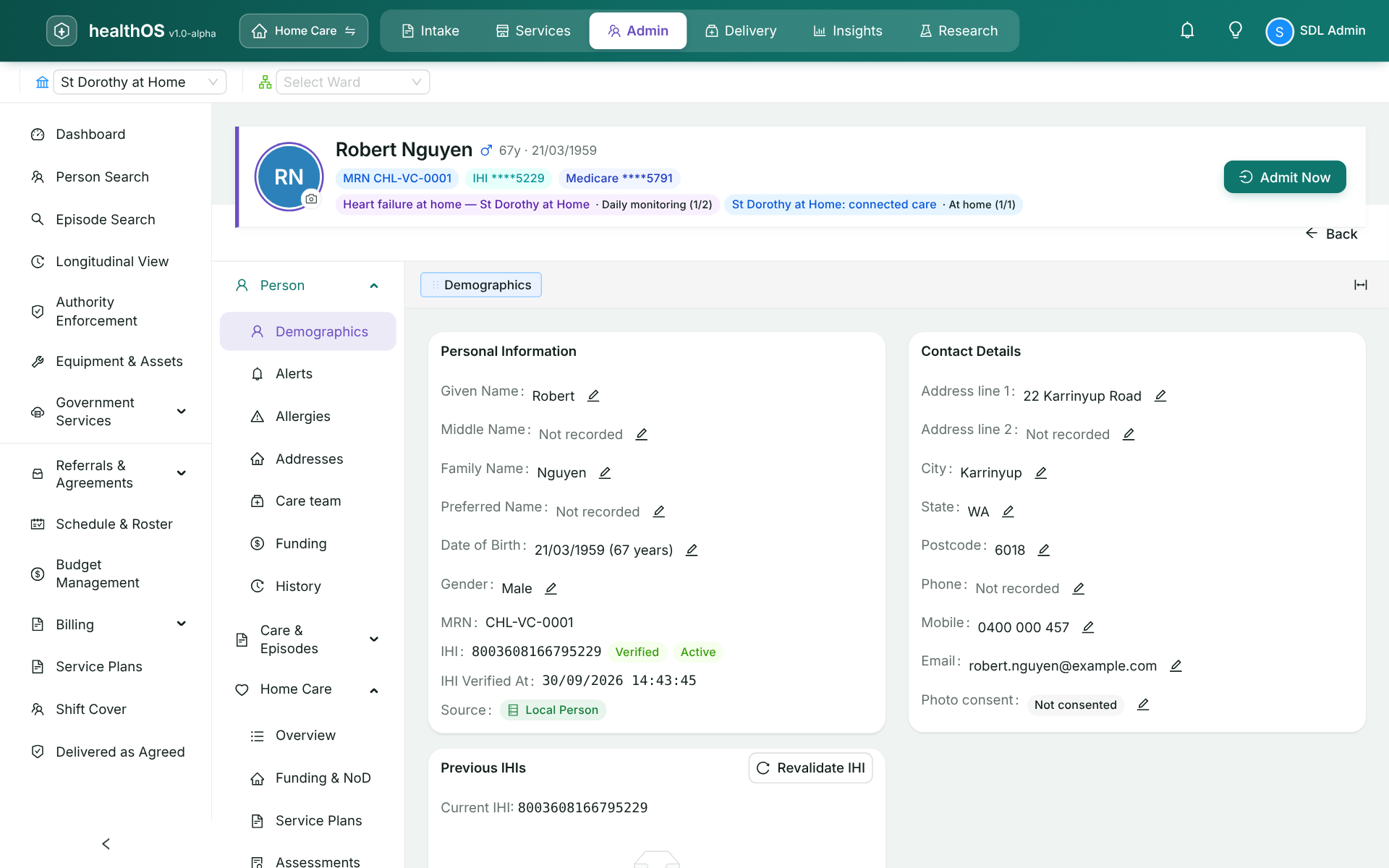
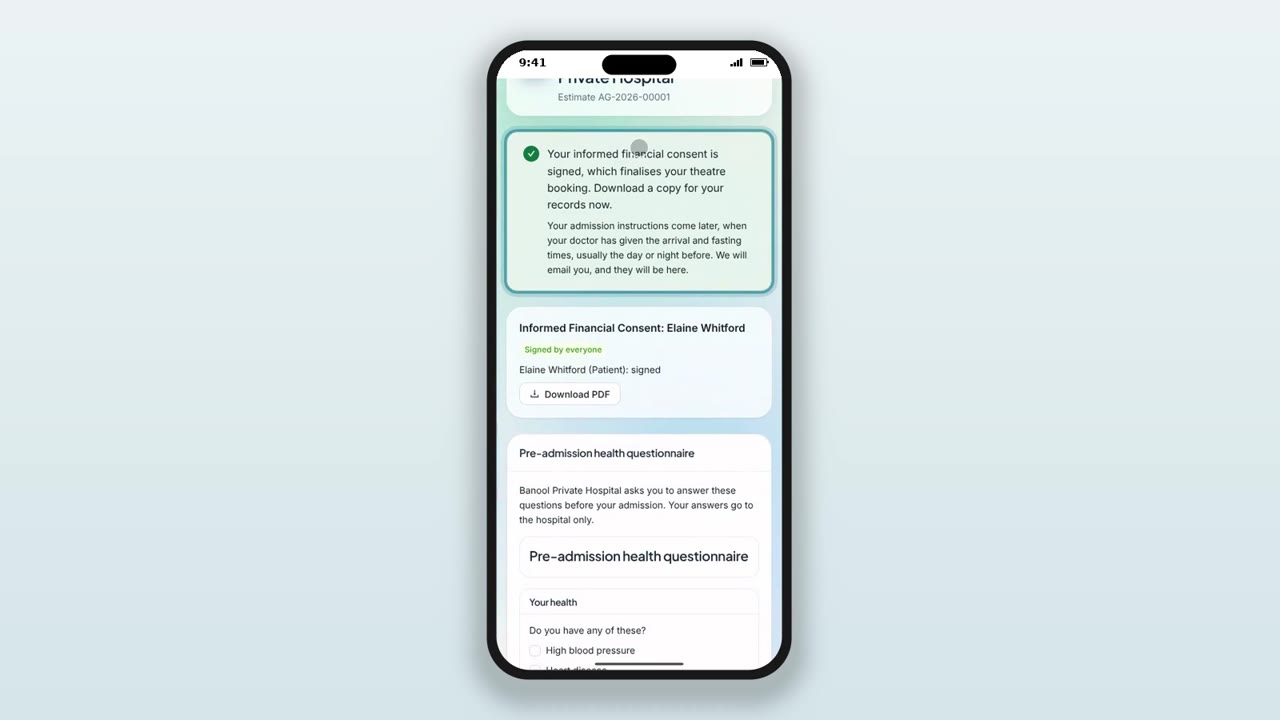
Patients open one emailed link, with no password and no app store, and finish their pre-admission from home: health questionnaires, what-to-expect education packs and the documents that need signing, informed financial consent included. By the time they arrive the paperwork is done and the clinical team already has the answers, so the day isn’t spent chasing a missing form. HealthOS Connections is for patients as well as families. See the patient portal.
- Pre-admission forms completed before arrival
- Education packs walk patients through their procedure
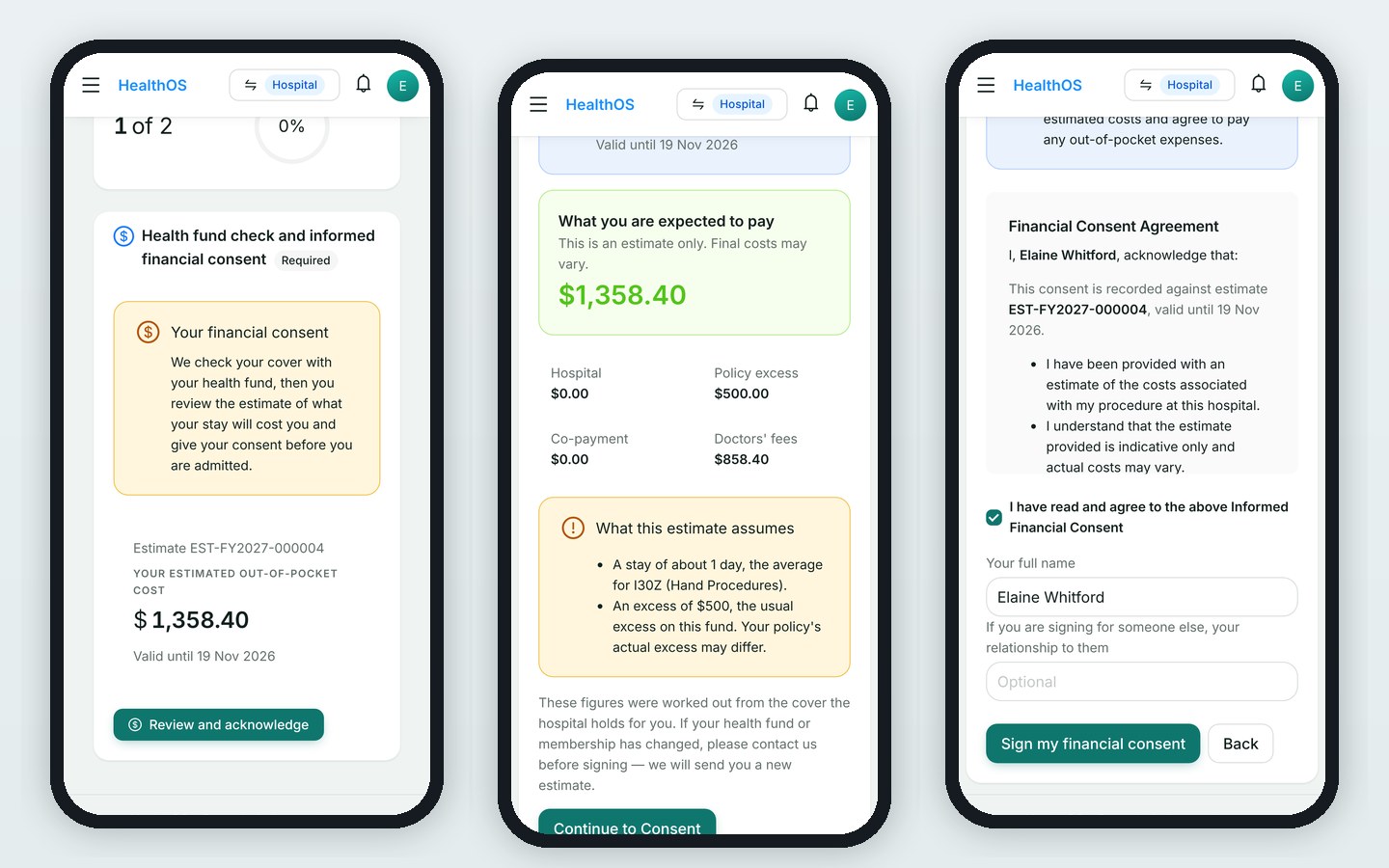
- Informed financial consent signed electronically
- The same portal keeps family in the loop during the stay
Theatre lists that are ready before the patient is
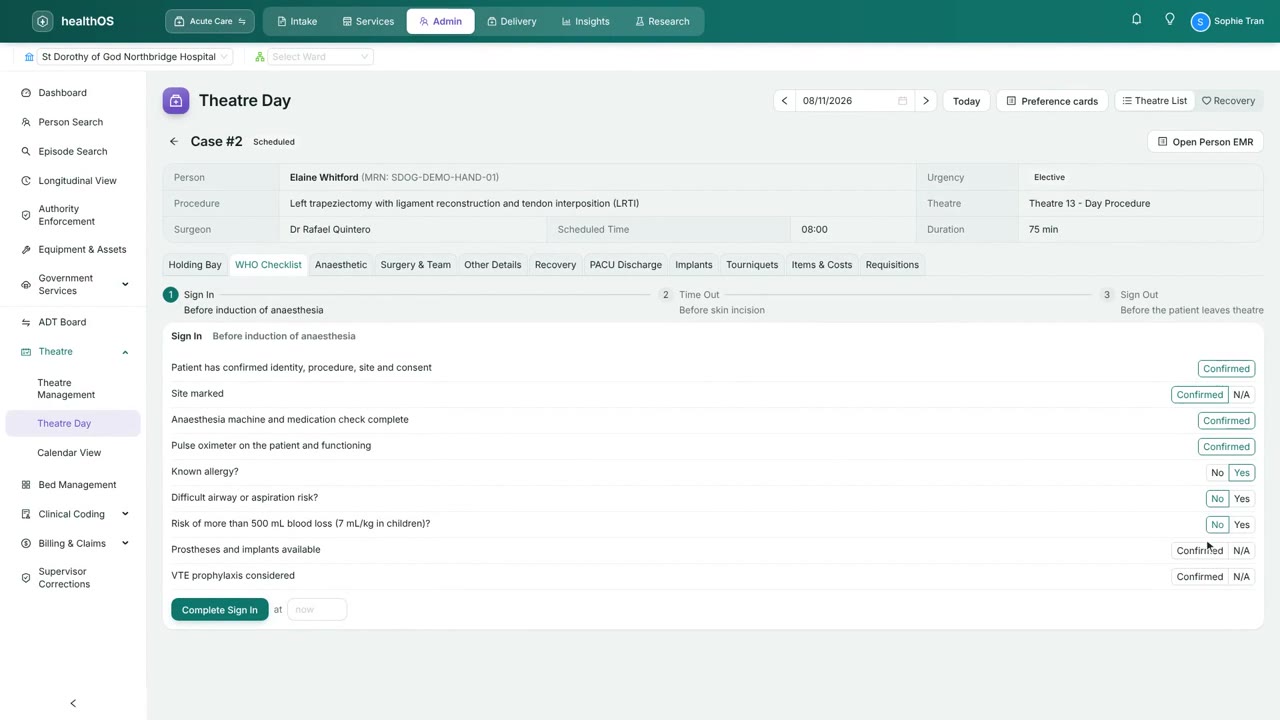
Cases are booked onto theatre sessions from the people waiting for them, with each surgeon’s equipment preferences ready for the list. On the day, the surgical safety checklist (sign in, time out, sign out), the surgical counts, the anaesthetic record and the recovery record are all kept on the patient’s episode, and recovery discharges the patient to the ward. Paper that still comes out of theatre is scanned on the unit’s multifunction device and filed to the episode by its number.
- Session booking and theatre utilisation
- Surgeon equipment preferences
- Surgical safety checklist and surgical counts
- Anaesthetic and recovery records
- Scanned documents filed to the episode, or held for review
Hand patients on without the phone calls and faxes
This is where sharing a platform pays off. When the receiving home care, aged care or allied health provider also works on HealthOS, discharge is a structured handoff instead of a fax. Send the referral and share the discharge summary. The community provider picks the person up on a pathway of their own, and the hospital can see it happen.
- Structured discharge referral to community and residential providers
- Discharge summaries assembled from the whole stay
- Diagnoses and procedures coded on the episode
- Follow-up and allied health coordination tracked on the pathway
Clear the coding backlog
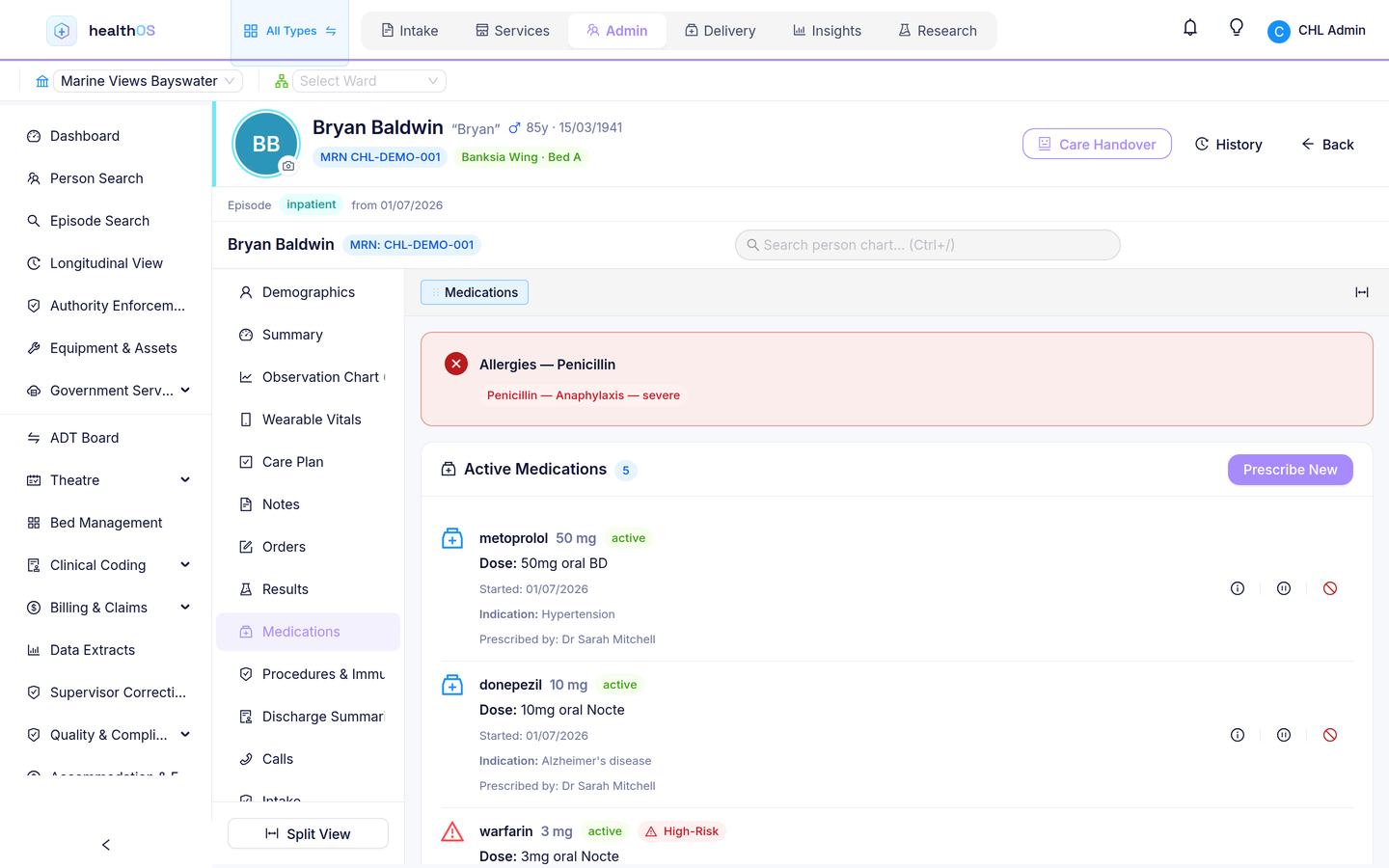
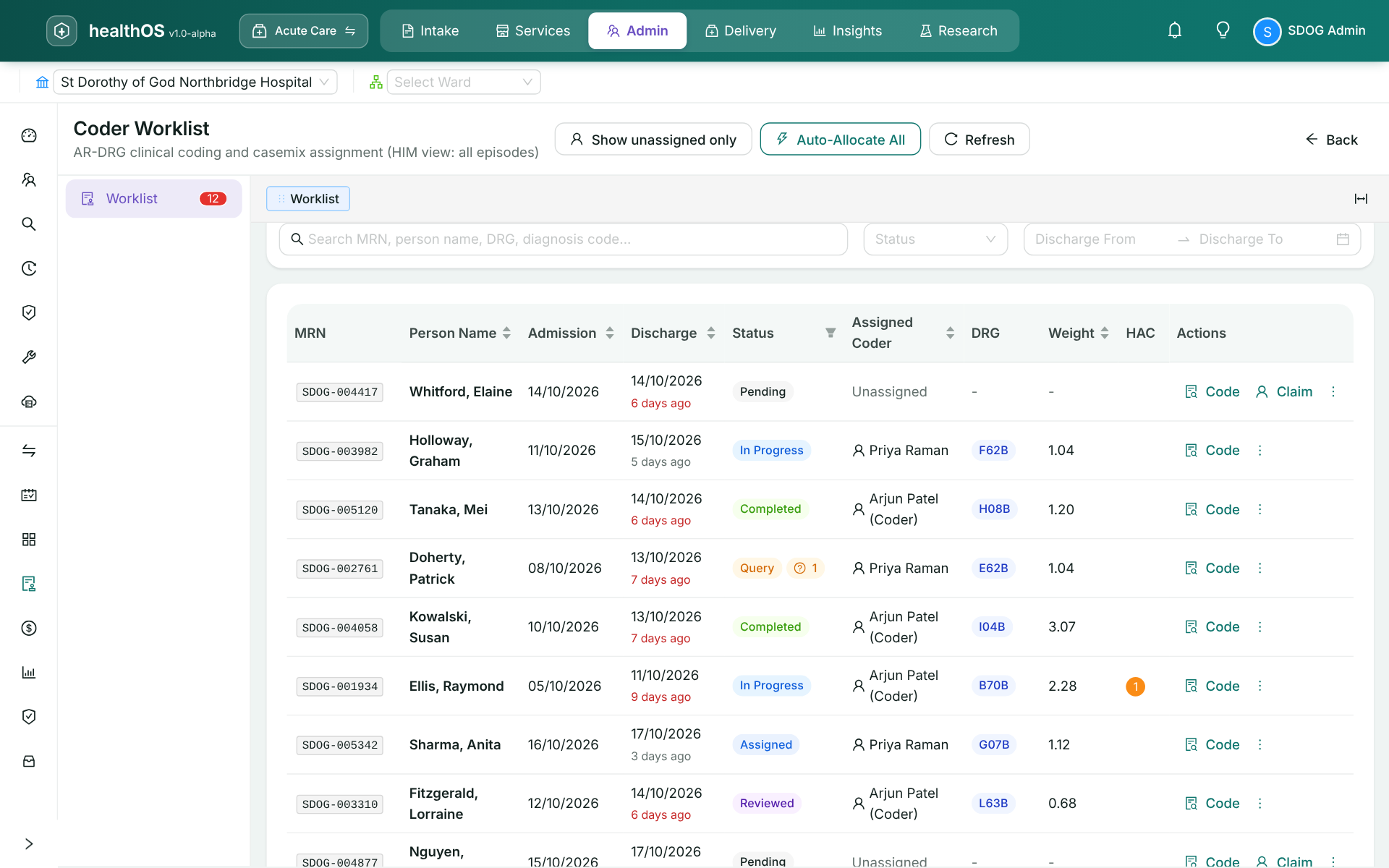
The slowest part of coding an episode is telling what the patient arrived with from what the stay added. HealthOS already holds the pre-admission record, so at admission it freezes a pre-existing baseline for the episode and your coders work on the difference: the principal diagnosis, additional diagnoses that affected management, and anything acquired on the ward. Condition onset flags and hospital-acquired complications come out of the same comparison, so they are there for audit without a second pass.
- Pre-existing baseline built from the pre-admission record, referral and medications, and from My Health Record once that connection is live
- Coder worklist, health information management allocation and coding queries
- Hospital-acquired complication screening on the episode's own conditions
- Groups to Medicare Severity Diagnosis Related Groups and to Australian Refined Diagnosis Related Groups V11.0, on a grouper certified for AR-DRG V12.0 and V11.0 (Code Navigator 1.0 on Docker/Linux)
Paid for every episode, sooner
Medicare, Veterans’ Affairs and health fund claims build from the episode, patients settle their share before admission, and the year’s funding is priced as it happens.
Get paid for every episode, sooner
Medicare, Veterans’ Affairs and health fund in-hospital claims are built from the episode your staff already recorded, so nobody keys the stay in again and less goes out wrong. They are sent through Medicare Online in batches you can follow, and remittances reconcile against the claims they pay. Medicare Online has passed its testing with Services Australia.
No bad debt at the front door
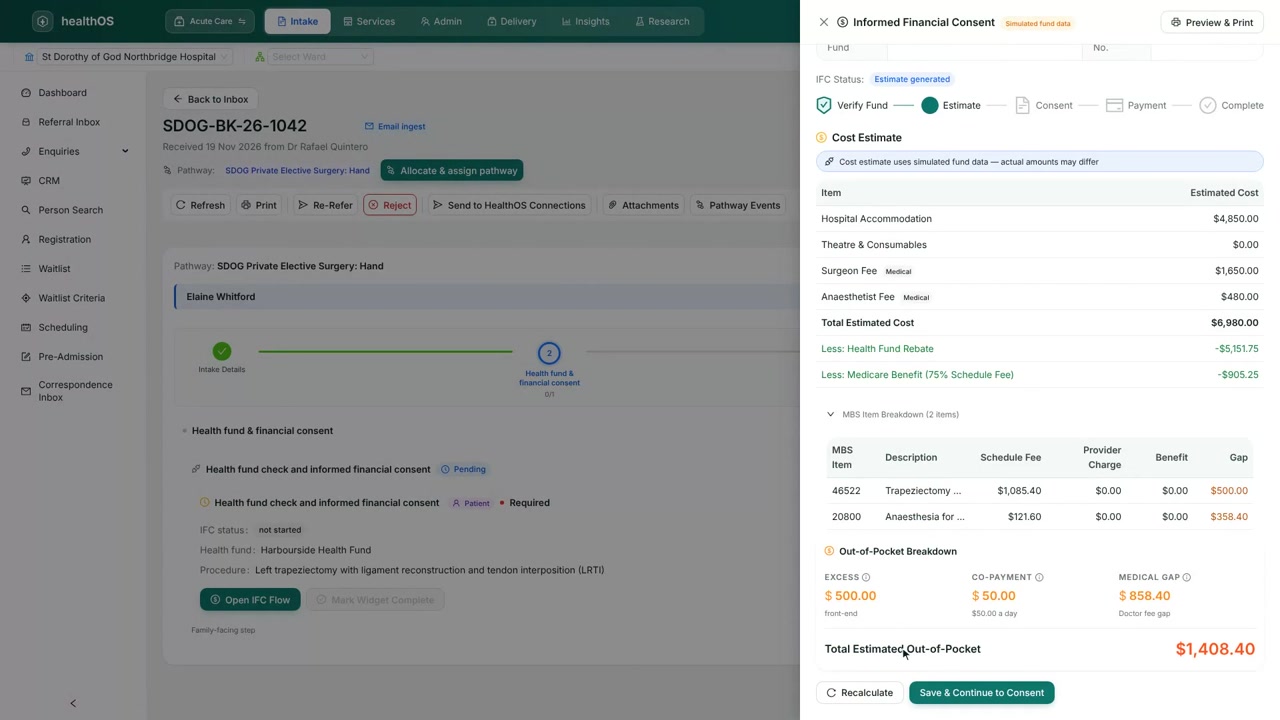
Patients sign a numbered estimate before admission, worked out from the Medicare Benefits Schedule fees for the listed items, the fund’s contracted rates and the patient’s own excess from the fund eligibility check. They know their share before they come in, and charges accrue on the episode as care is given. It all runs on your own chargemaster: accommodation, theatre bands tied to their Medicare Benefits Schedule items, pharmacy and sundries, each at standard and contracted rates, with each health fund contract carrying its per diem, case payment and diagnosis related group rates.
- Chargemaster with standard and contracted rates
- Theatre bands and their billing rules
- Health fund contracts: per diem, case payment and diagnosis related group rates
- Prosthesis charges from the Prescribed List
- Informed financial consent estimates issued from the pre-admission
Know your funding before year end
Every coded episode is priced in National Weighted Activity Units by the National Efficient Price Determination, so finance and casemix teams watch the year as it happens: weighted activity to date against a phased target, the projected year-end, tonight’s inpatients as an estimate, and the headroom left under the Commonwealth cap, from the region down to the ward. Funding scenarios show what next year’s prices or rules would do before a service agreement is signed. See NWAU Periscope.
- Weighted activity priced from the determination, episode by episode
- Against a phased target, with the projected year-end
- Commonwealth cap headroom in weighted activity and dollars
- Funding scenarios for next year’s prices and rules
Keep the systems you’ve already paid for
HealthOS works with the Healthcare Identifiers Service, Provider Digital Access, Medicare Online and your email platform, with My Health Record in development, so nothing you run has to be ripped out. See government services and how it connects.
See it in action
Related
See what changes for your hospital
We will walk you through it on real data. Bring the hardest thing your current platform can't do.