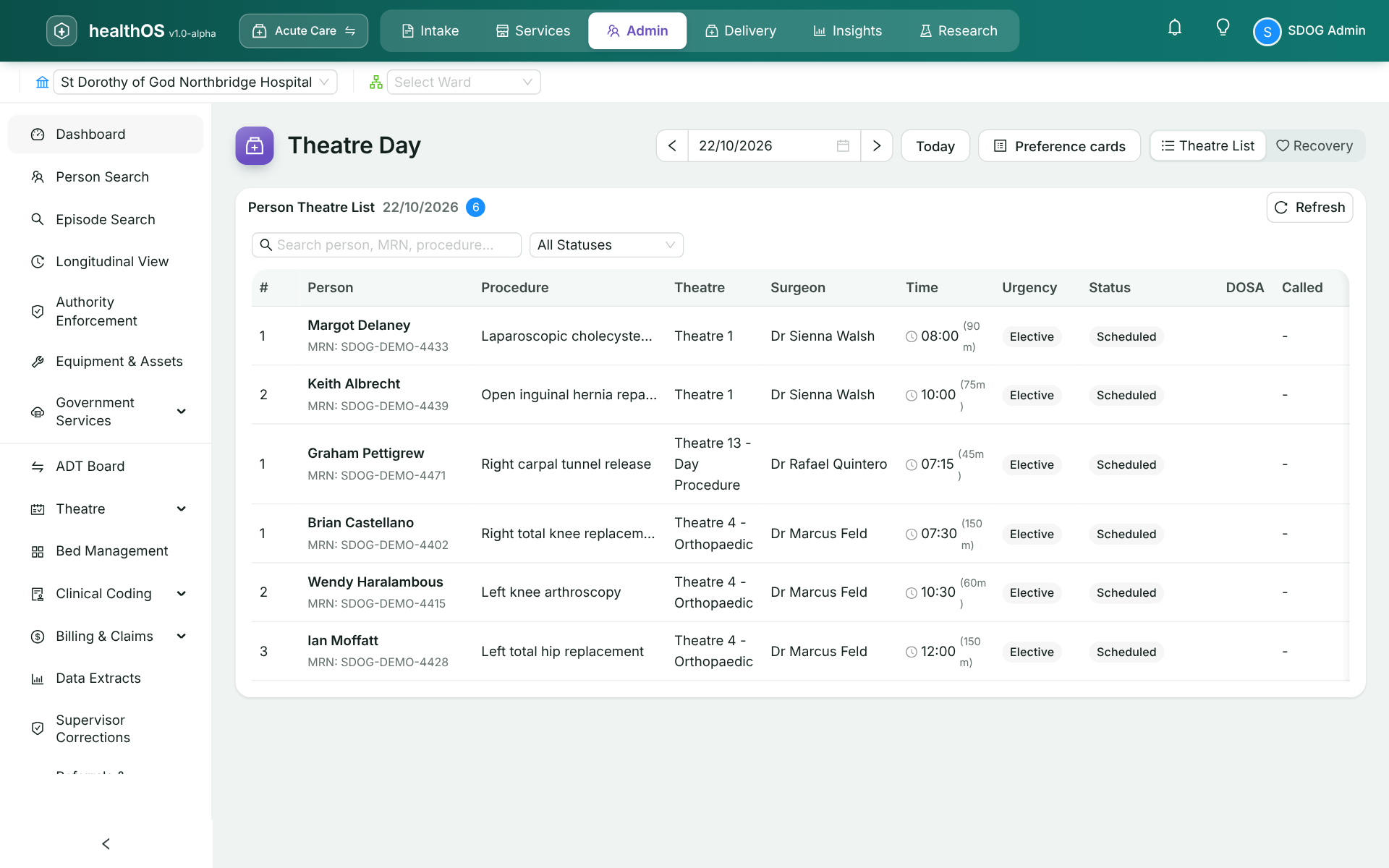
Theatre lists ready before the patient is Checklist and counts recorded as they happen.
- Set up the surgeon's way. The preference card for each operation tells the team what to lay out before the patient arrives.
- One record of the case. The anaesthetic and recovery records sit on the same episode as the checklist and counts.
- Leftover paper, scanned in. What still comes out on paper is scanned on the unit's own device and filed to the episode by its number.
Everyone works from the same patient
Keeps a preference card for each operation: positioning, skin prep, tray, instruments, sutures and prosthesis. The list for the day is built from it.
Run the surgical safety checklist (sign in, time out, sign out) and the surgical counts on the episode.
Records the anaesthetic on the same episode as the pre-anaesthetic assessment.
Keeps the recovery record and discharges the patient from recovery to the ward.
Step by step
- Booked onto a session
Cases are placed on theatre sessions from the people waiting for them, and the list shows theatre, surgeon, time and urgency.
- The tray is ready
The surgeon's preference card for the operation tells the team what to set up before the patient arrives.
- The checklist and counts
Sign in, time out and sign out, and the counts, are recorded as they happen.
- Anaesthetic and recovery
Both records sit on the episode, and recovery hands the patient on to the ward.
- The paper that is left
Anything still on paper is scanned on the unit's multifunction device and filed to the episode by its number, or held for someone to file.
Each step starts from the last
From the step before. Theatre gets an admitted patient whose consent is signed, assessment done and bed booked.
To the next step. The ward receives the patient with the operation, anaesthetic and recovery already on the record.
See what changes for your hospital
We will walk you through it on real data. Bring the hardest thing your current platform can't do.