Everything care needs next, it already has*
The hours are already paid for. The proof is in the care already given. The insights are in the data already recorded. Today it's spread across systems that don't talk to each other. HealthOS brings it onto one record, connected to the systems you keep, and hands it back.
It just needs one connected record. That’s what HealthOS is.
Where do you work?
Choose your care setting to follow one person through it, step by step, on the screens your team would use.

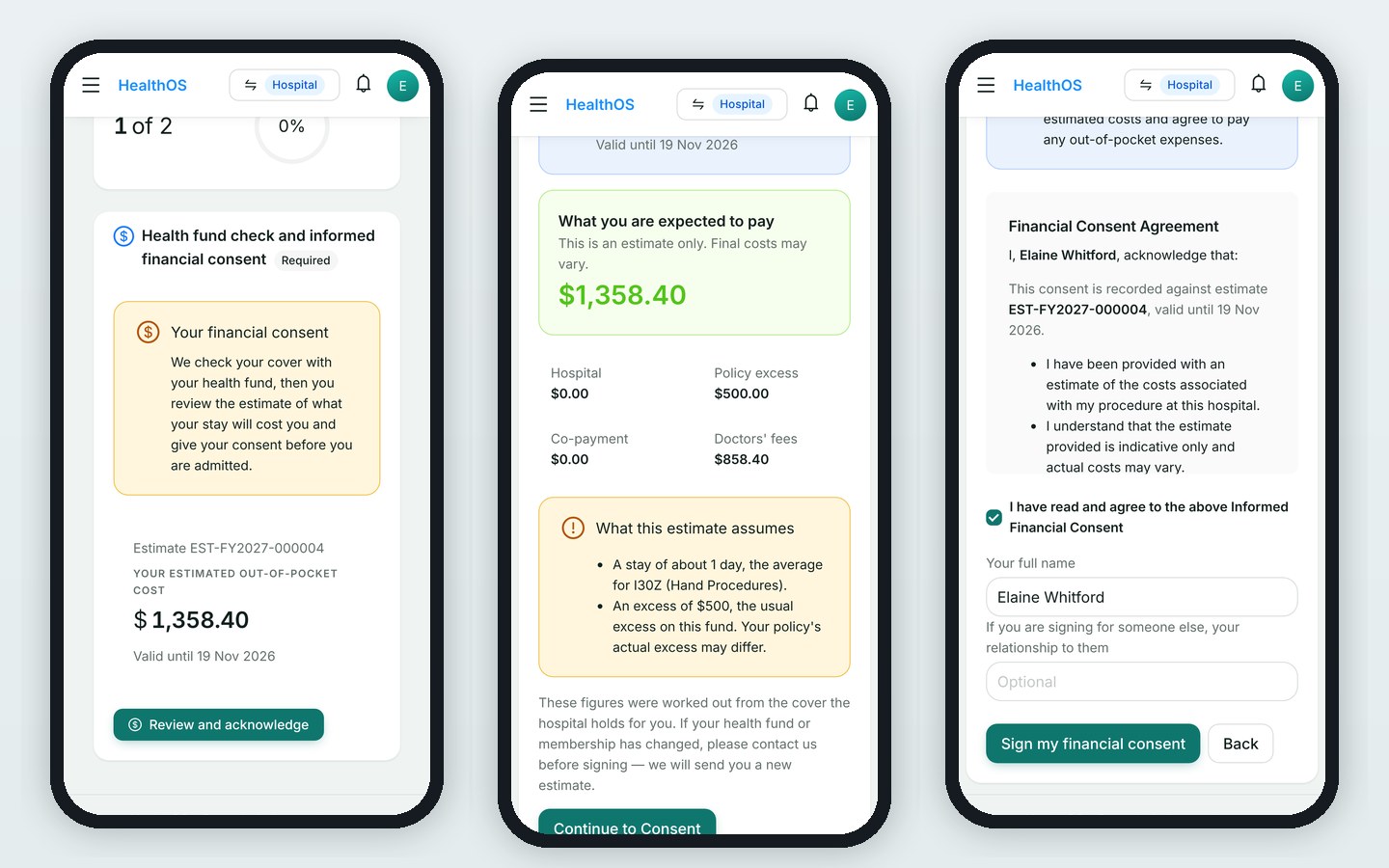


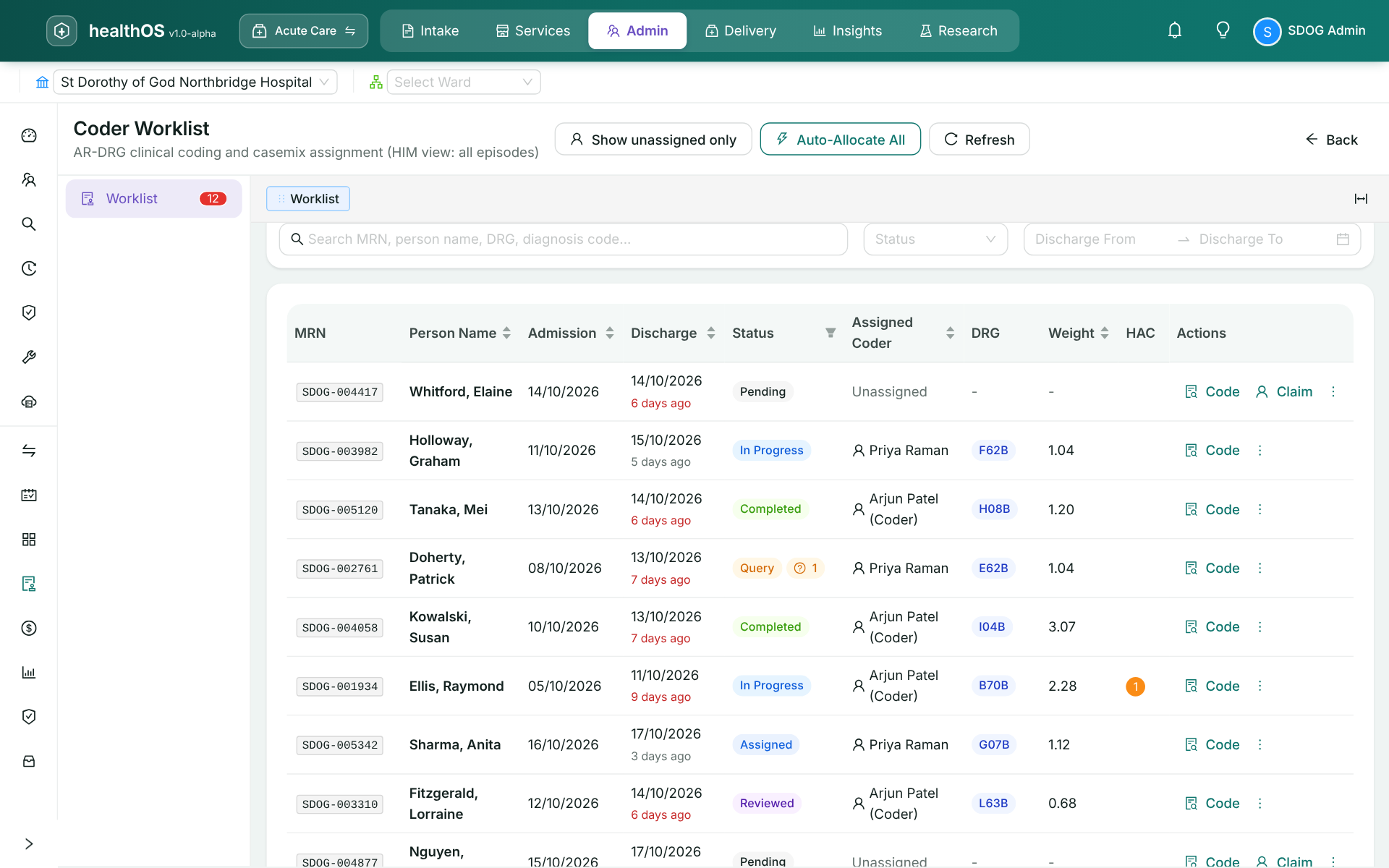
Follow the whole of the hospital journey →See where the year will land in NWAU →
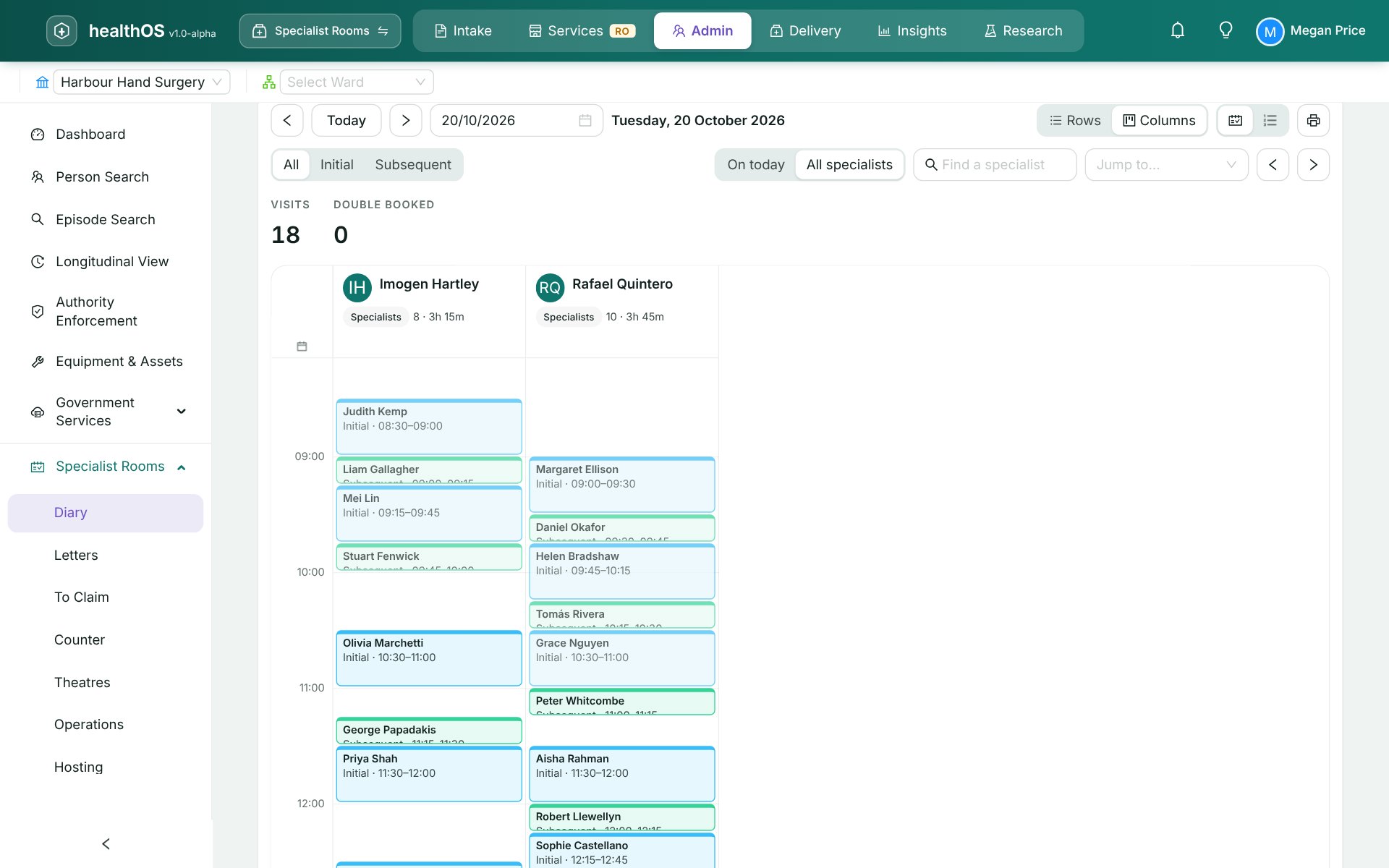
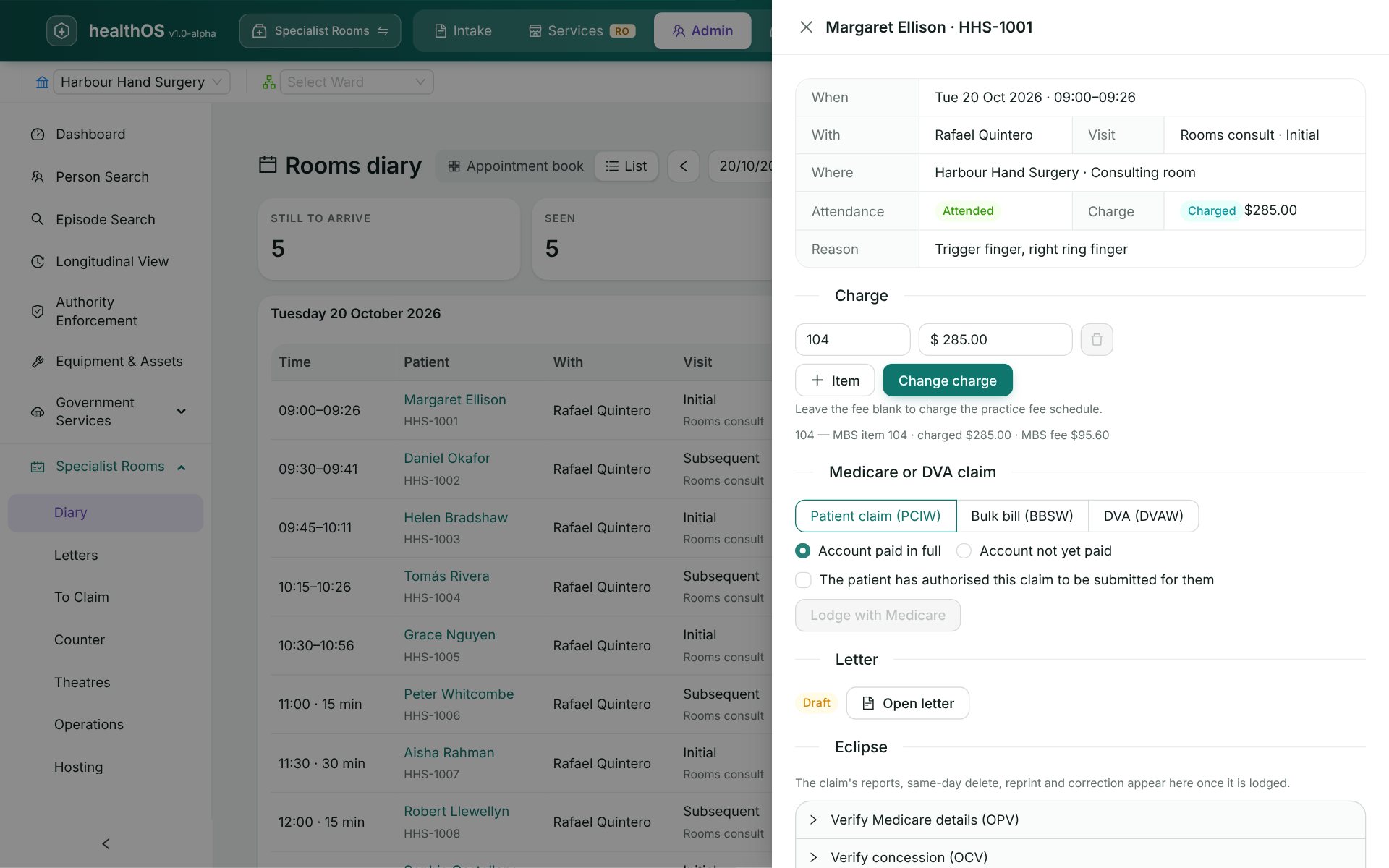






Wherever you sit in the care circle
From the bedside to the boardroom, find where you sit and see what changes for your part of the work.
Workers can care
Things are written once, and every clinician sees the whole person, in a facility or on the road.
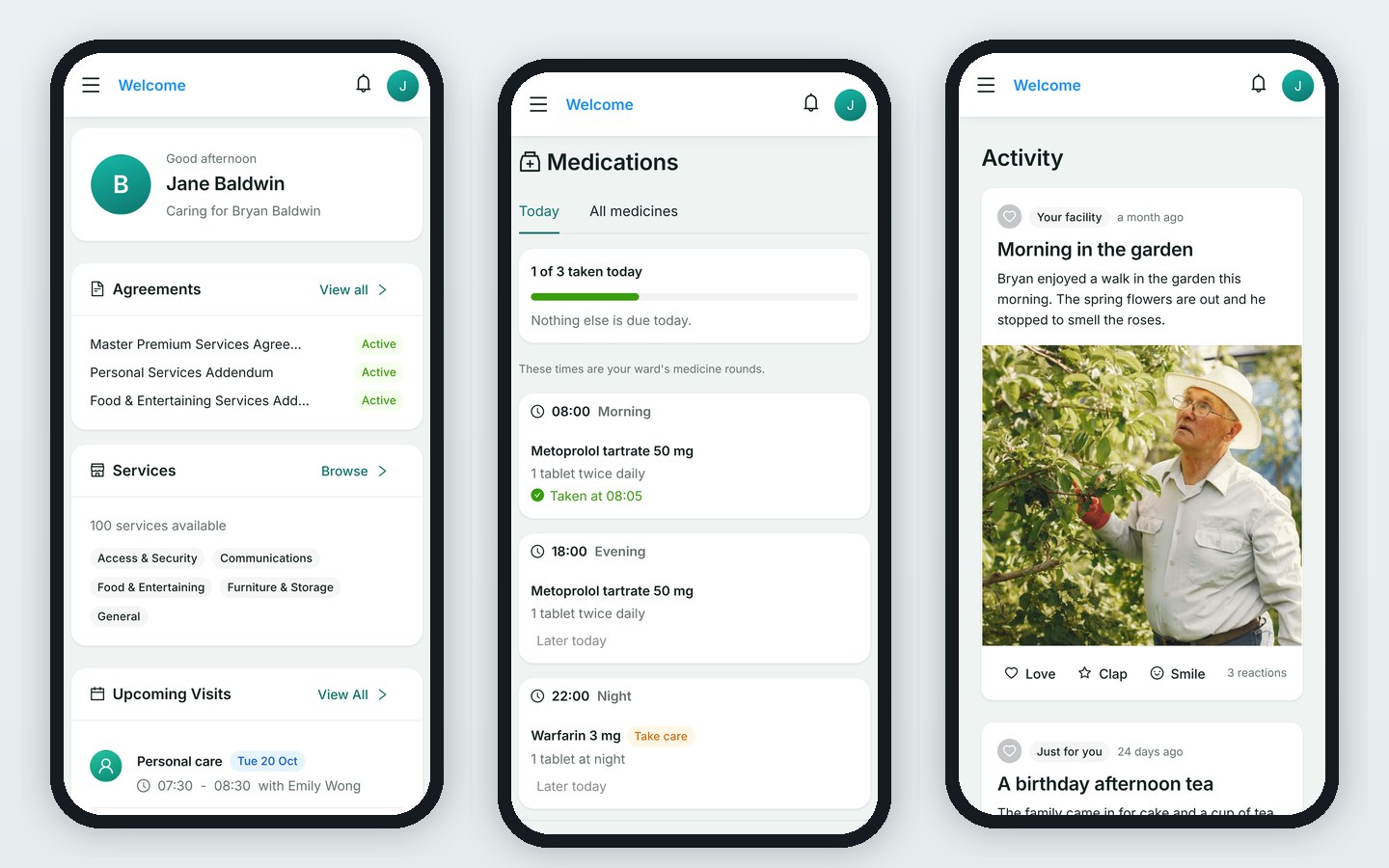
Families can see
Nothing about a person is lost between systems, so families stop chasing.
Providers can sustain it
Admin shrinks, the business runs on the live record, and the record becomes research-ready.
Six modules, one record
Most providers already run a care admin system and a clinical record. What they lack is everything around them. Start with the module you’re missing, connect the systems you keep, and add the rest when you’re ready.
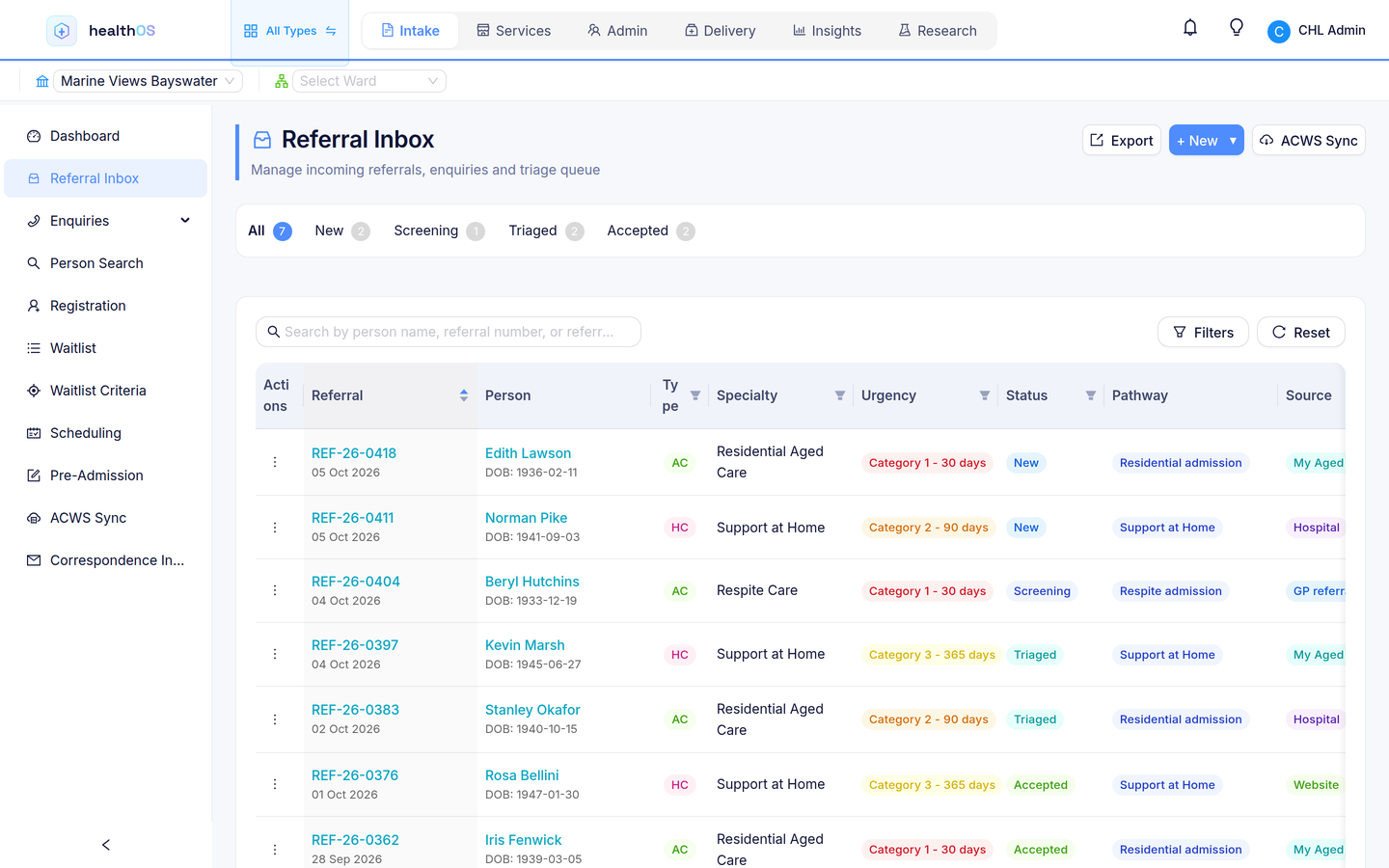
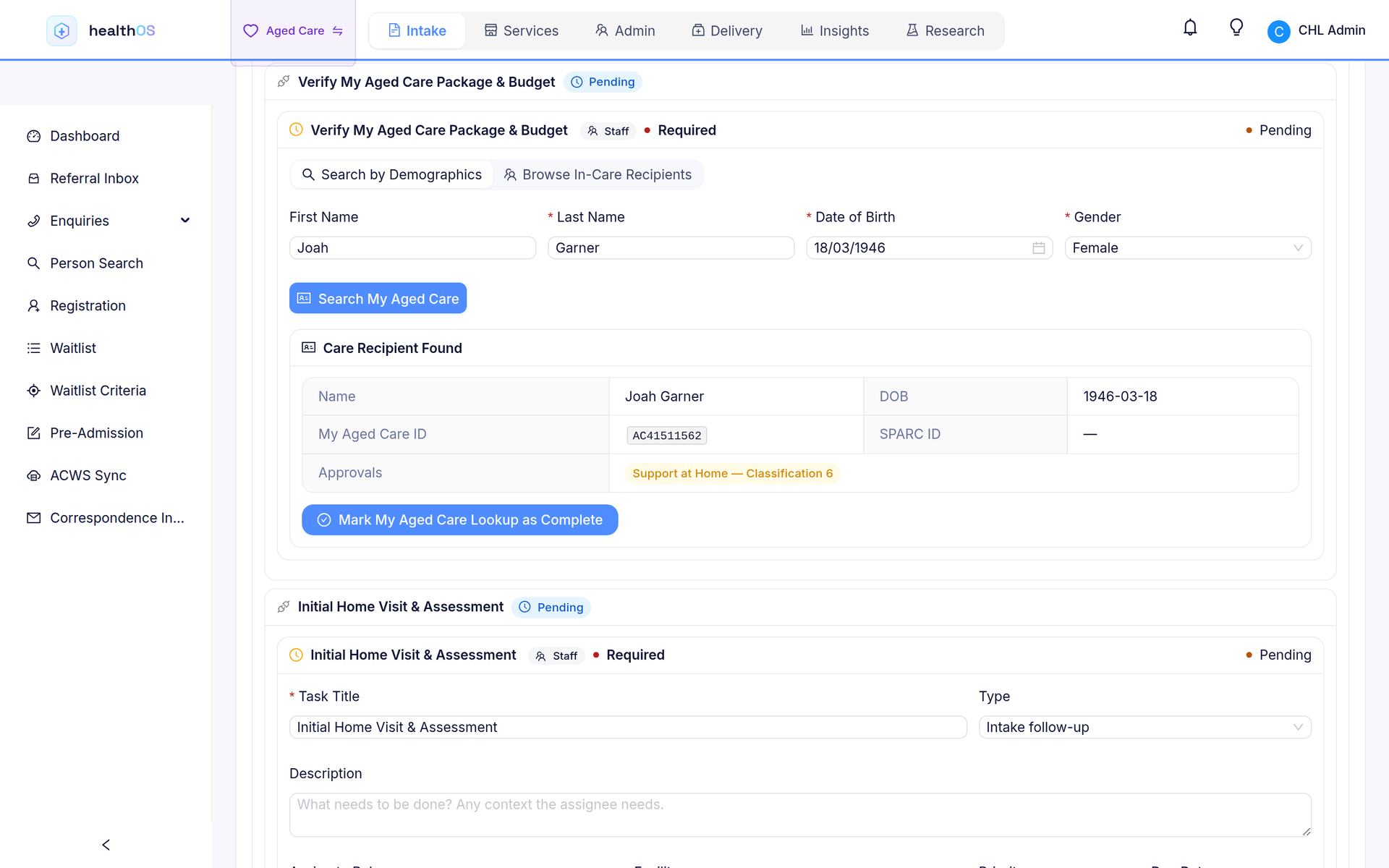
Every referral in one inbox, from a specialist's request for admission to a Support at Home referral straight from Services Australia, with funding checked before the first call.
Explore → ServicesA catalogue across every funding stream, scheduling, signed agreements, and delivery that flows to billing.
Explore → InsightsDashboards for every role and plain-English questions, built on the live record instead of last month’s extract.
Explore → ResearchDe-identified, ethics-ready cohorts from the care already recorded, without a separate pipeline.
Explore →Admissions, beds, funding and billing.
Explore → Care deliveryThe clinical record on the ward, in residential care and at home.
Explore →Already have one? HealthOS connects to it, so the new modules work from the same record. Starting fresh? Use ours. How we connect →
Three ways in, one job each
Each of these does one job a provider needs done this quarter, with no implementation project and nothing to replace. Take one, or several on one subscription and one bill. When you want more of the journey, it is the same software reading the whole record.
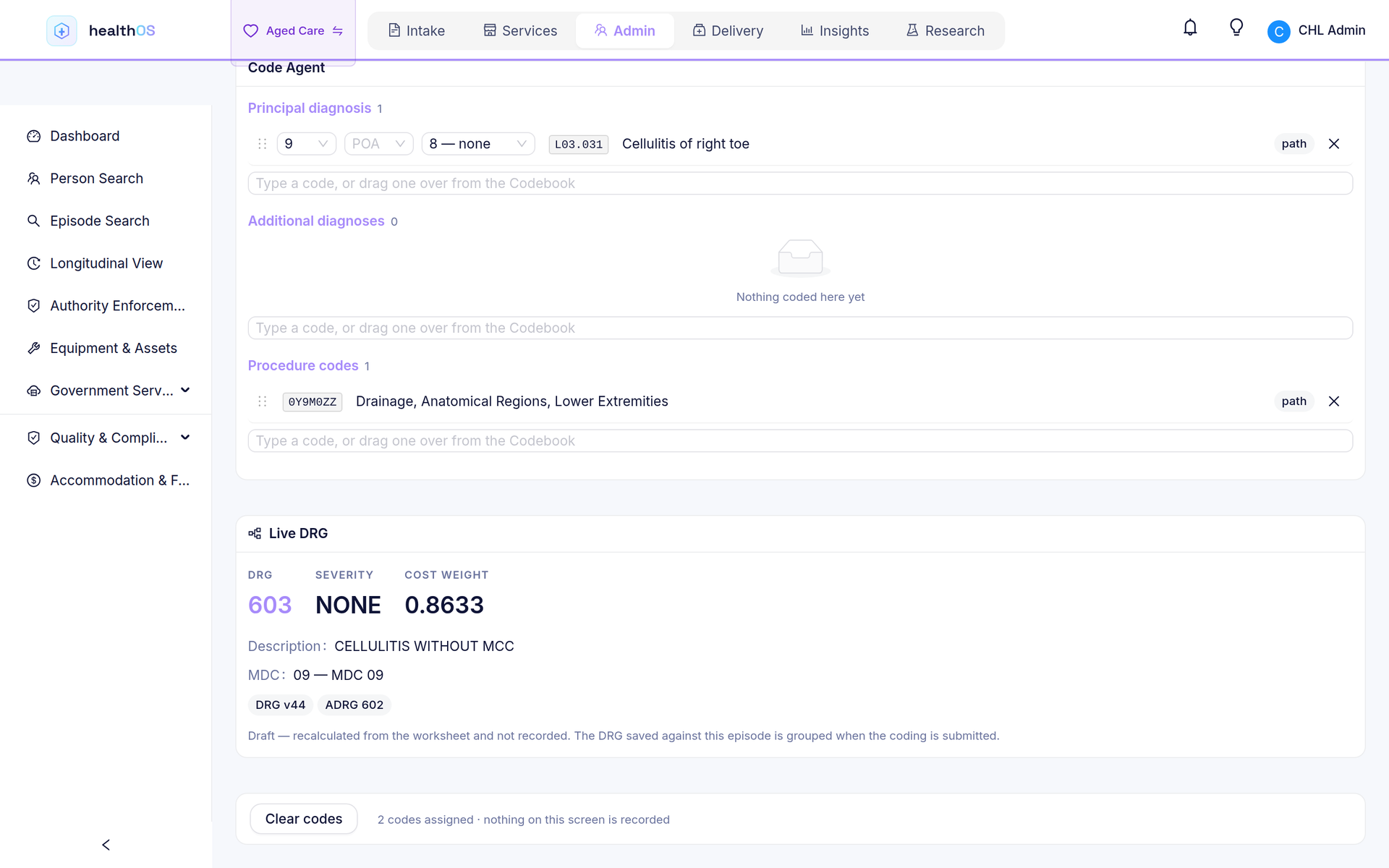
Code Navigator + Code Captain
Clinical coding and DRG grouping in your browser. The Code Navigator lets you search the index, verify in the tables and check the grouping as you code, and Code Captain, an AI autocoder, traces each code it proposes to the sentence it came from. Patient details are removed in your browser before anything leaves it.
From $79 per coder a month, seven days free.
Care Minutes Periscope
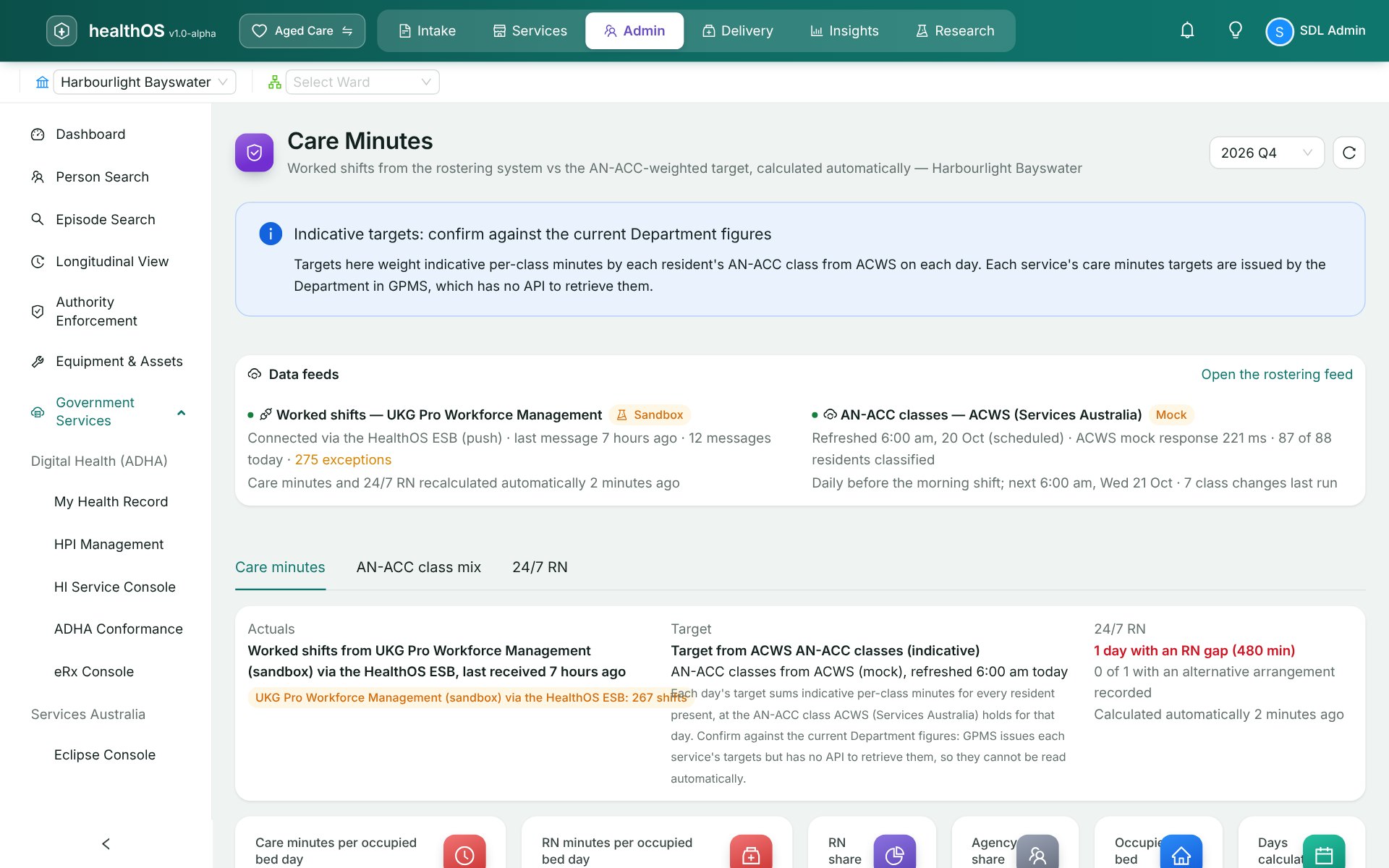
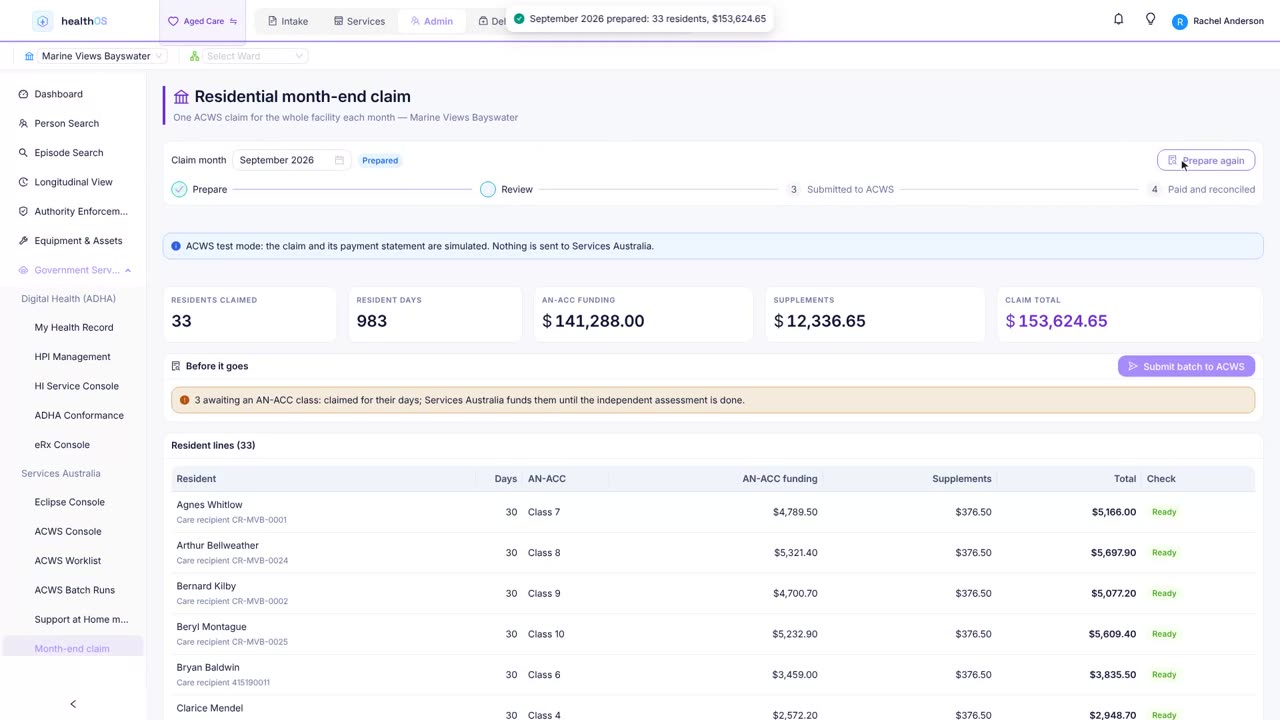
Your homes’ connection to government. GPMS and ACWS connected with your own credentials, residents and their AN-ACC classes read live from Services Australia, the hours worked from your roster by upload or a connected rostering system, and your 24/7 RN report and Quality Indicators lodged through GPMS.
$129 per user a month, seven days free.
Support at Home Purser
The first question every family asks is what Support at Home will pay for and what it will cost them. Quote straight from the My Aged Care referral that arrives through GPMS, against the person’s live classification, budget and contribution rates in ACWS, priced from your own list, and accept the referral once they agree.
$79 per user a month, seven days free, when it opens.
What the modules look like in use
Every referral in one inbox
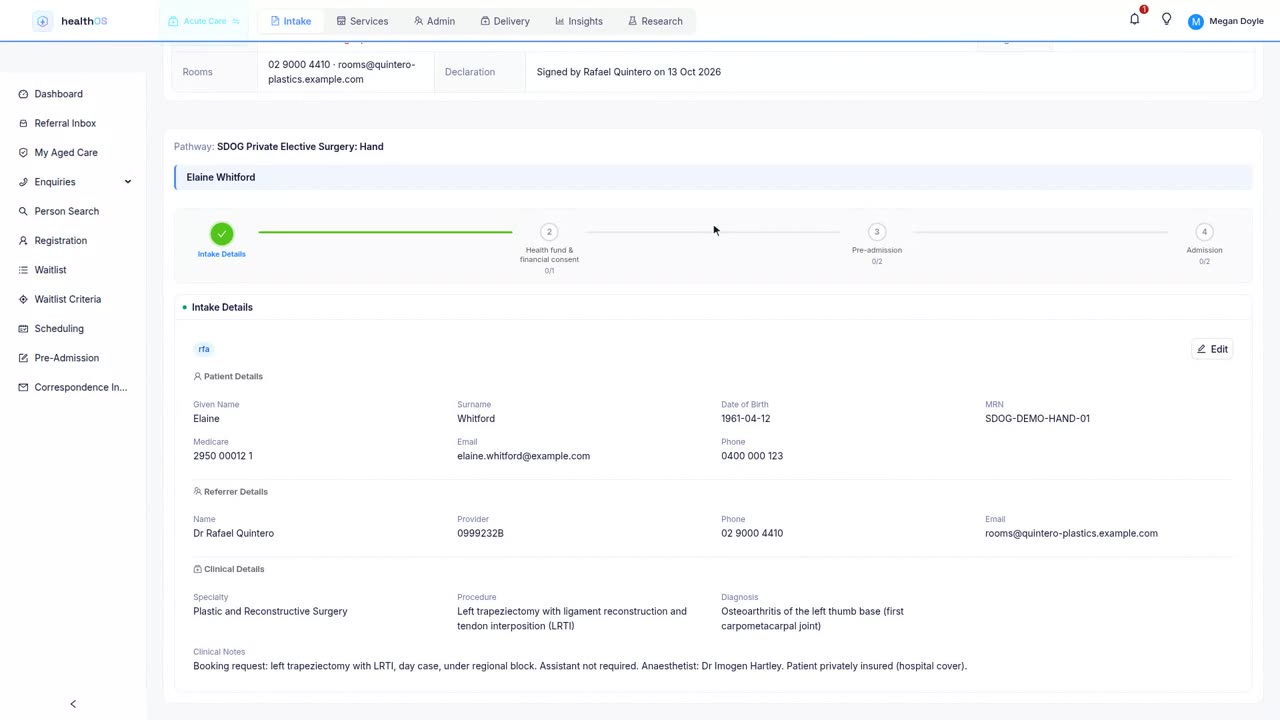
A specialist's request for admission, a GP's letter and a Support at Home referral from Services Australia's gateway all land in the same inbox. Medicare, DVA and package budgets are checked on the way in, so your team knows a person's funding before the first call.
- Requests for admission from specialists' rooms
- Referral sync from the aged care gateway
- Waitlists and pathways through to admission
- Funding position visible at first contact
One care record, wherever care happens
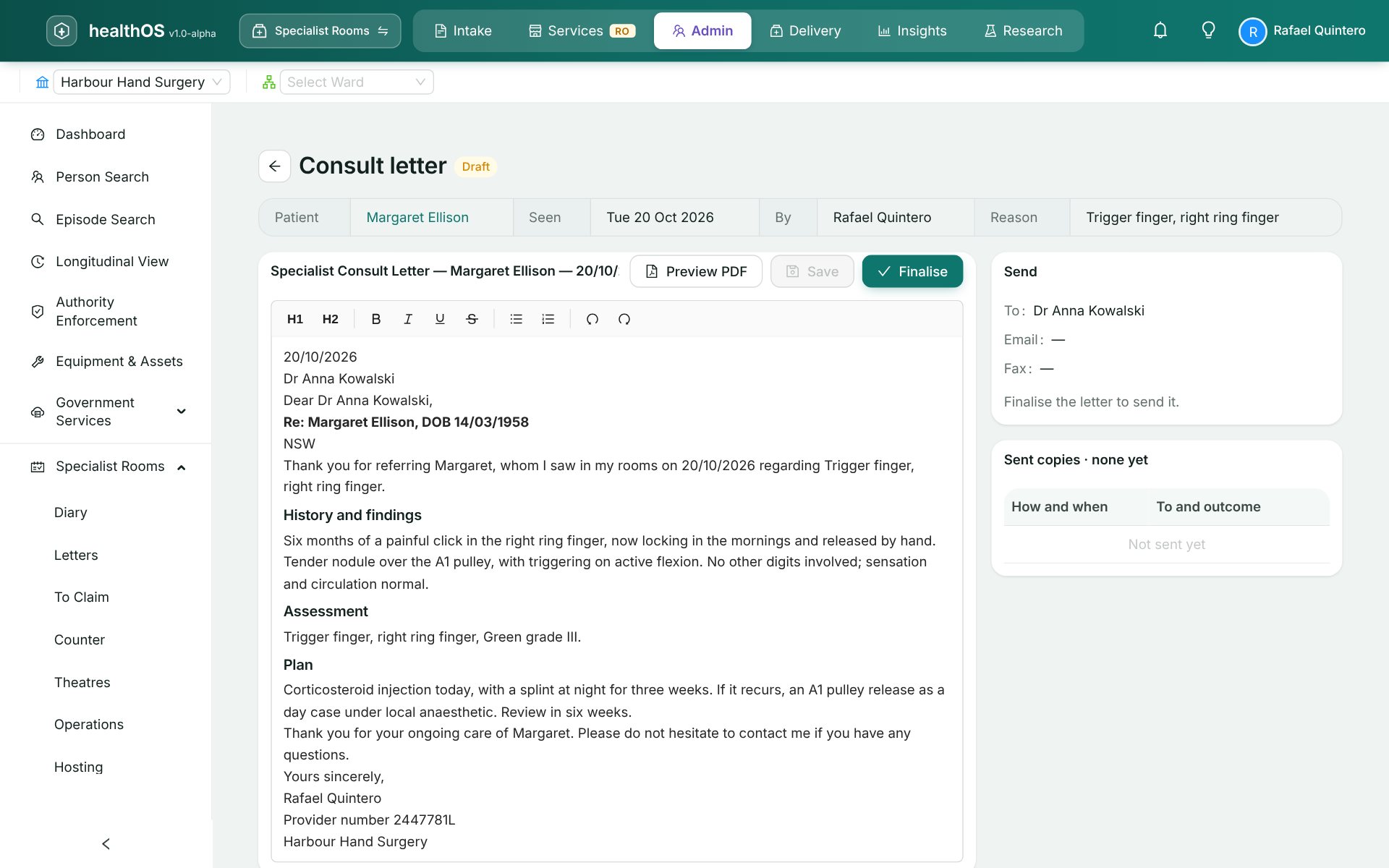
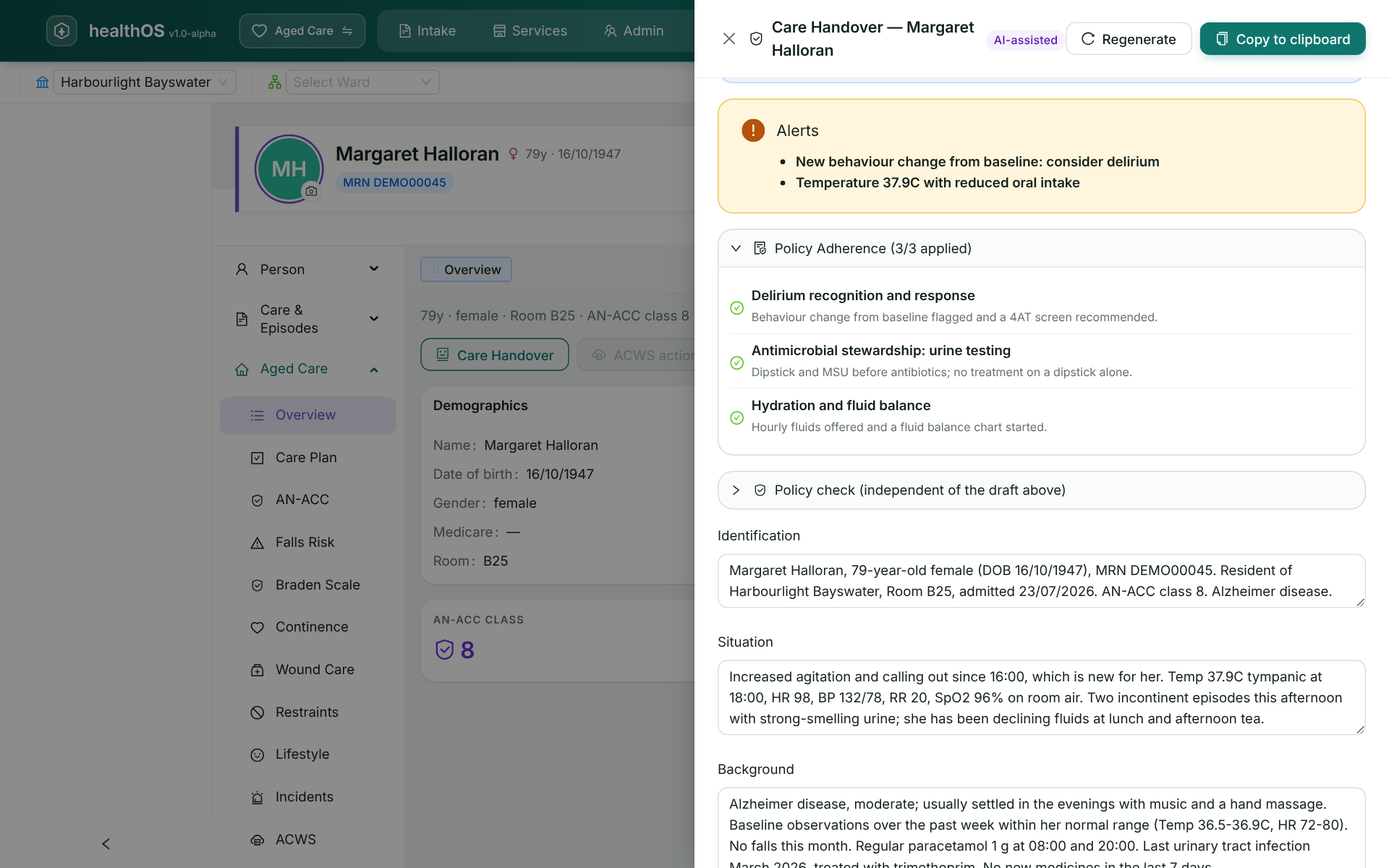
Assessments, care plans, progress notes and medications stay together whether someone is on a hospital ward, in residential care, at home, or moving between them. Pathways guide each step so nothing depends on memory.
- Voice-dictated notes, signed by the clinician
- Discharge summaries read into a draft for review
- Care pathways configured per facility
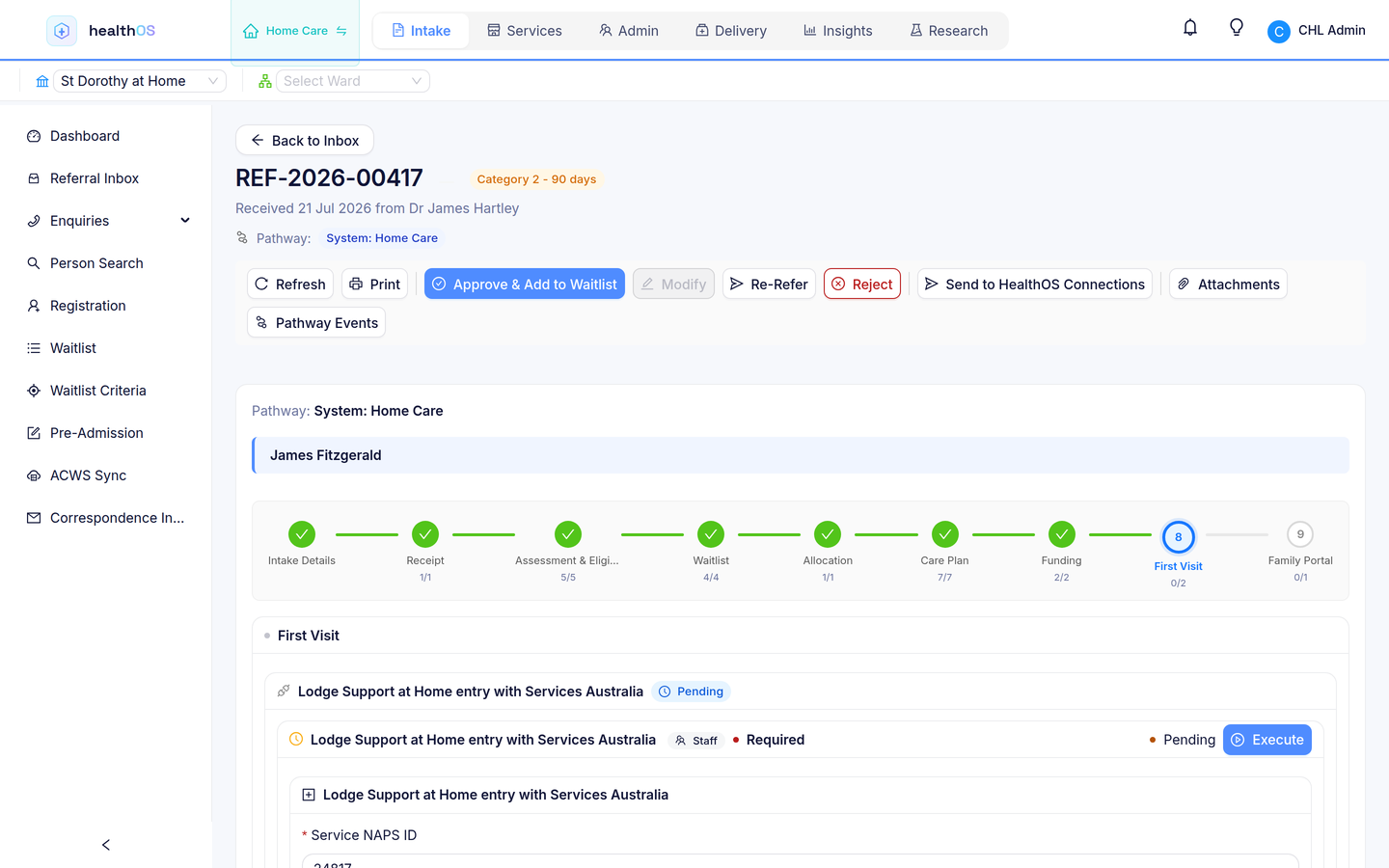
Book it, deliver it, and bill it from one place
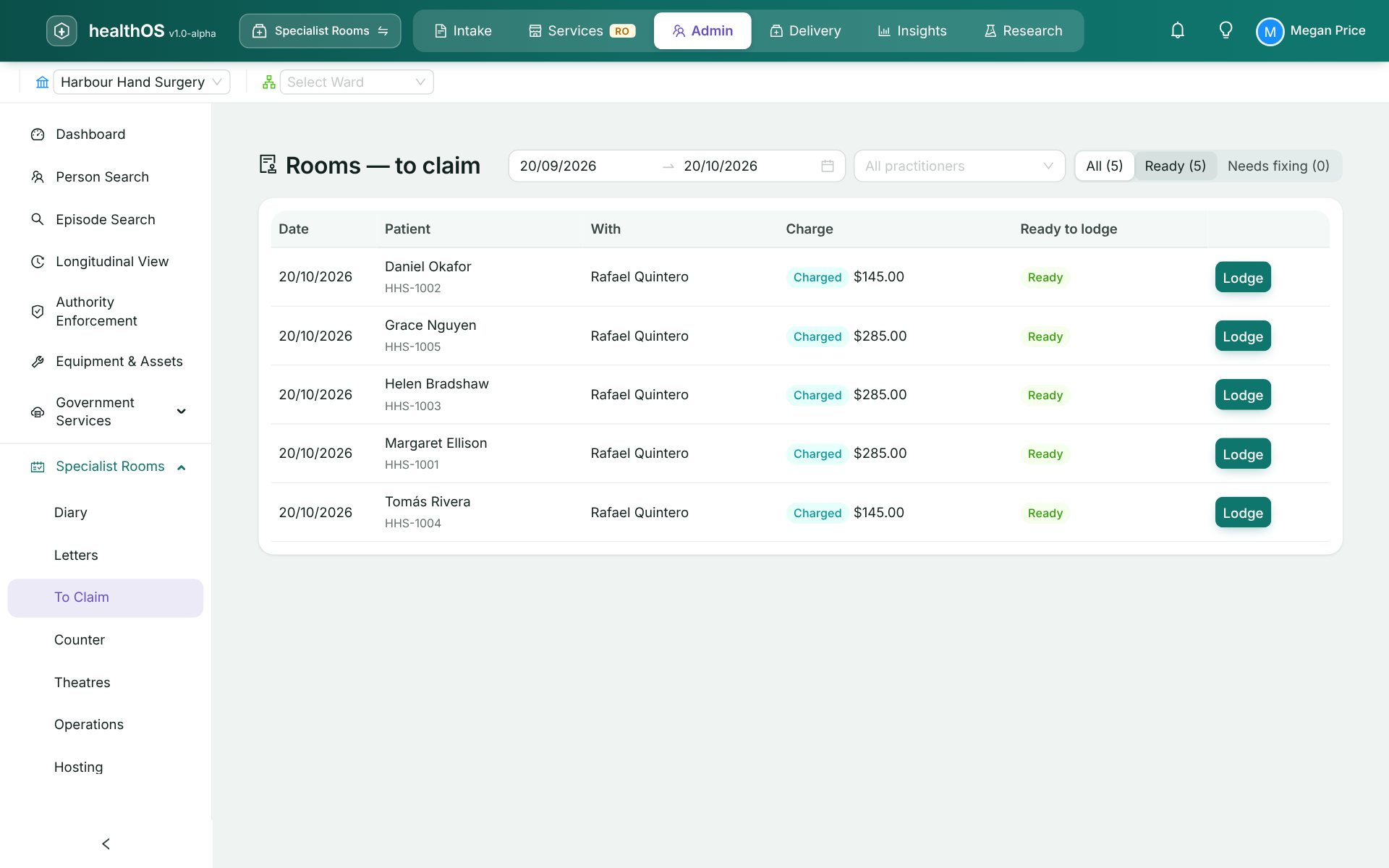
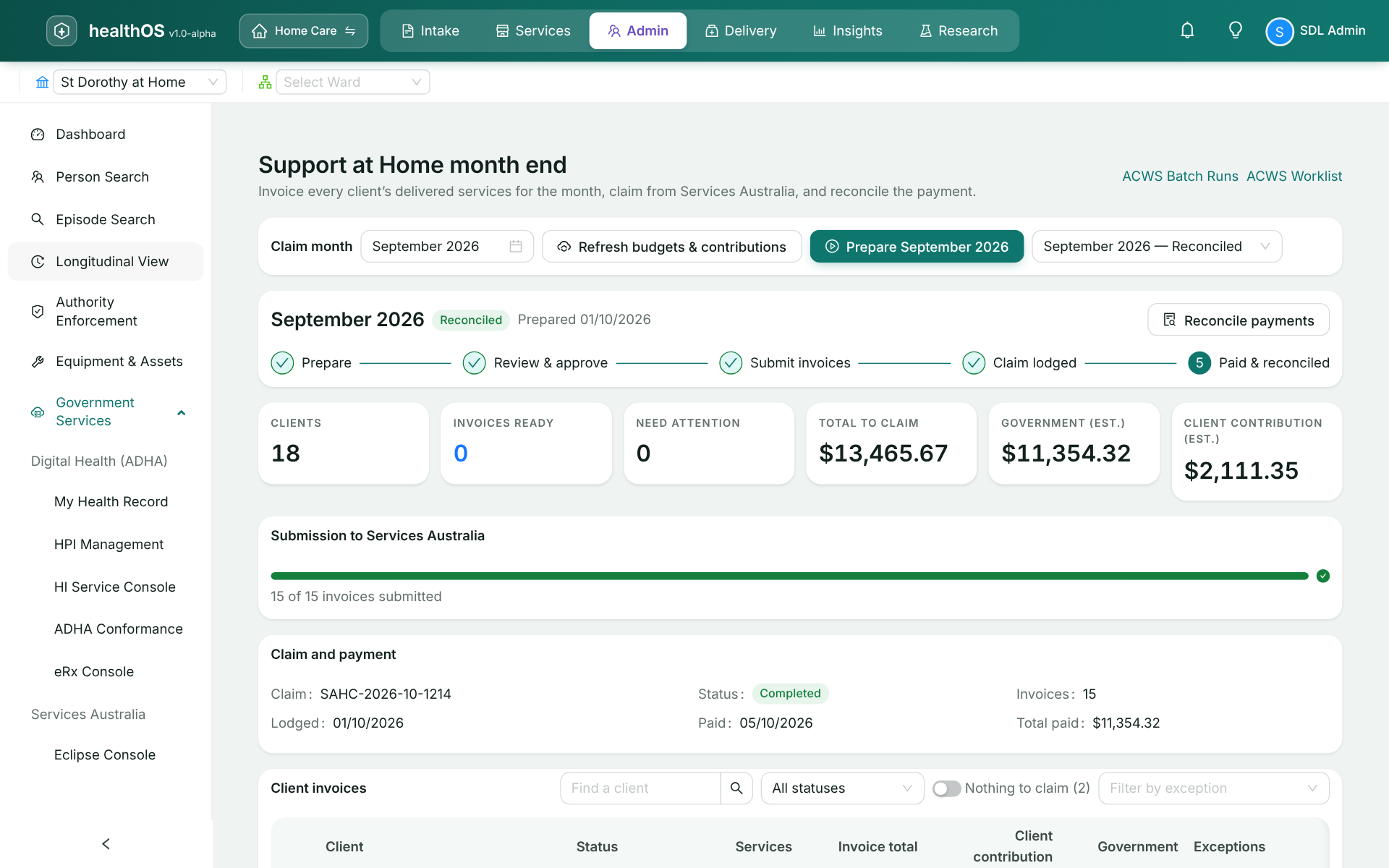
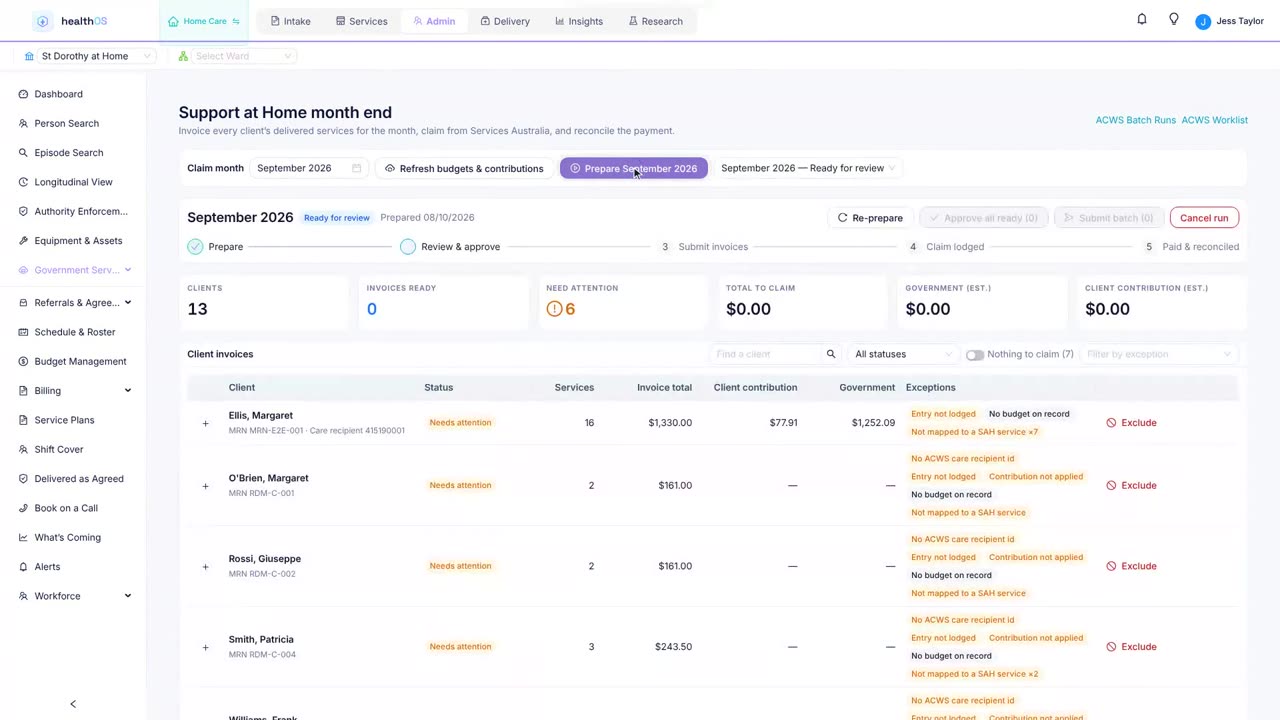
The service catalogue, the roster and the visit all share one record. Delivery is captured at the point of service, matched to price, and flows to finance without anyone re-keying it.
Explore services →
Patients and families see what's happening
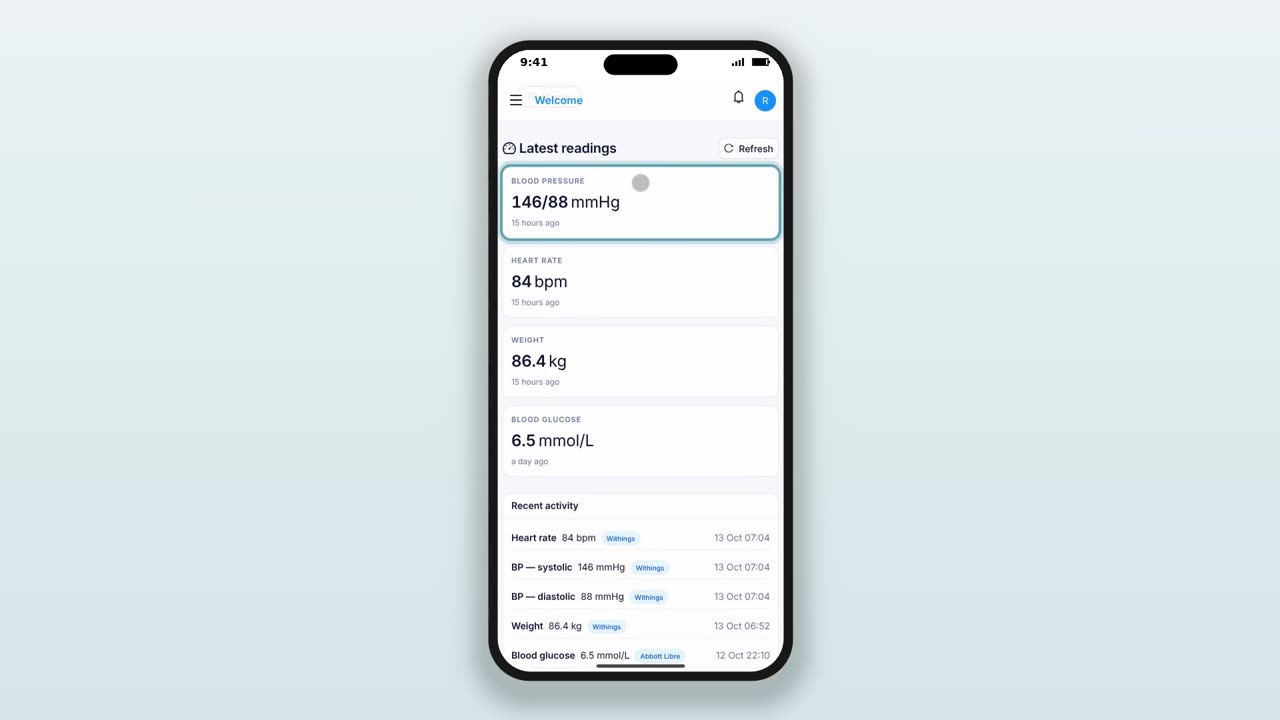
Patients complete their pre-admission and sign their financial consent from home. Families browse and book extra services, sign agreements, and follow updates in their own portal. The care team no longer fields the same phone call five times a week.
Explore the portals →
Numbers you can take to the board
Dashboards for every role, built on the live record, where every figure is one certified measure with its definition a hover away. Ask in plain English and the answer is a chart built from those measures, so the number you present is one you can trace.
Explore insights →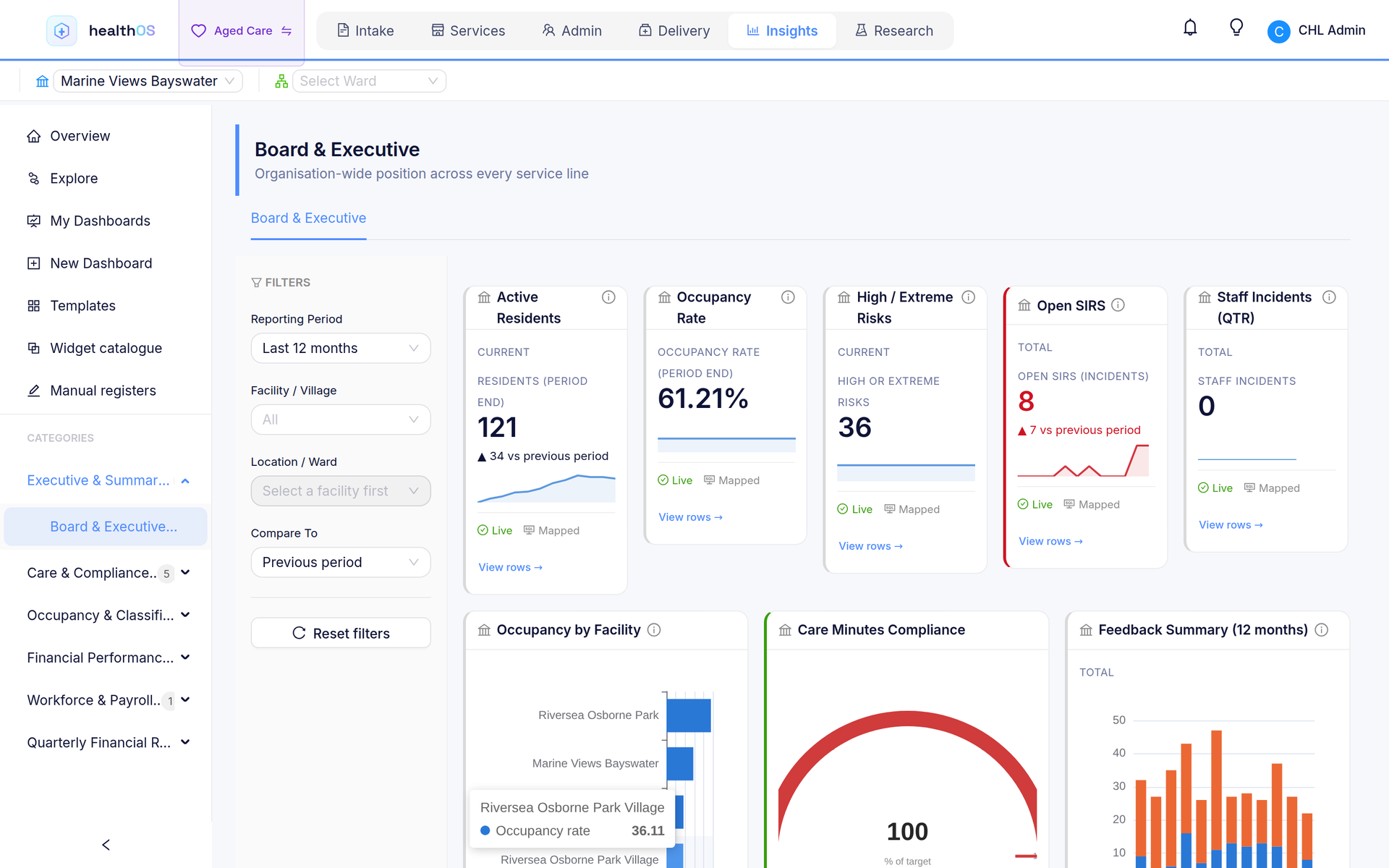
The paperwork is done
Any software that touches the government gateways has to pass their testing first. This is where we stand today.
HI Service
Identity checks against the national Healthcare Identifiers Service at intake.
Aged Care Web Services
Support at Home budgets, entry and departure events, claiming and reconciliation.
GPMS B2G Foundational
Quality Indicators and 24/7 RN reporting lodged without the portal.
Medicare Eclipse
Medicare, DVA and private health claiming with remittance reconciliation.
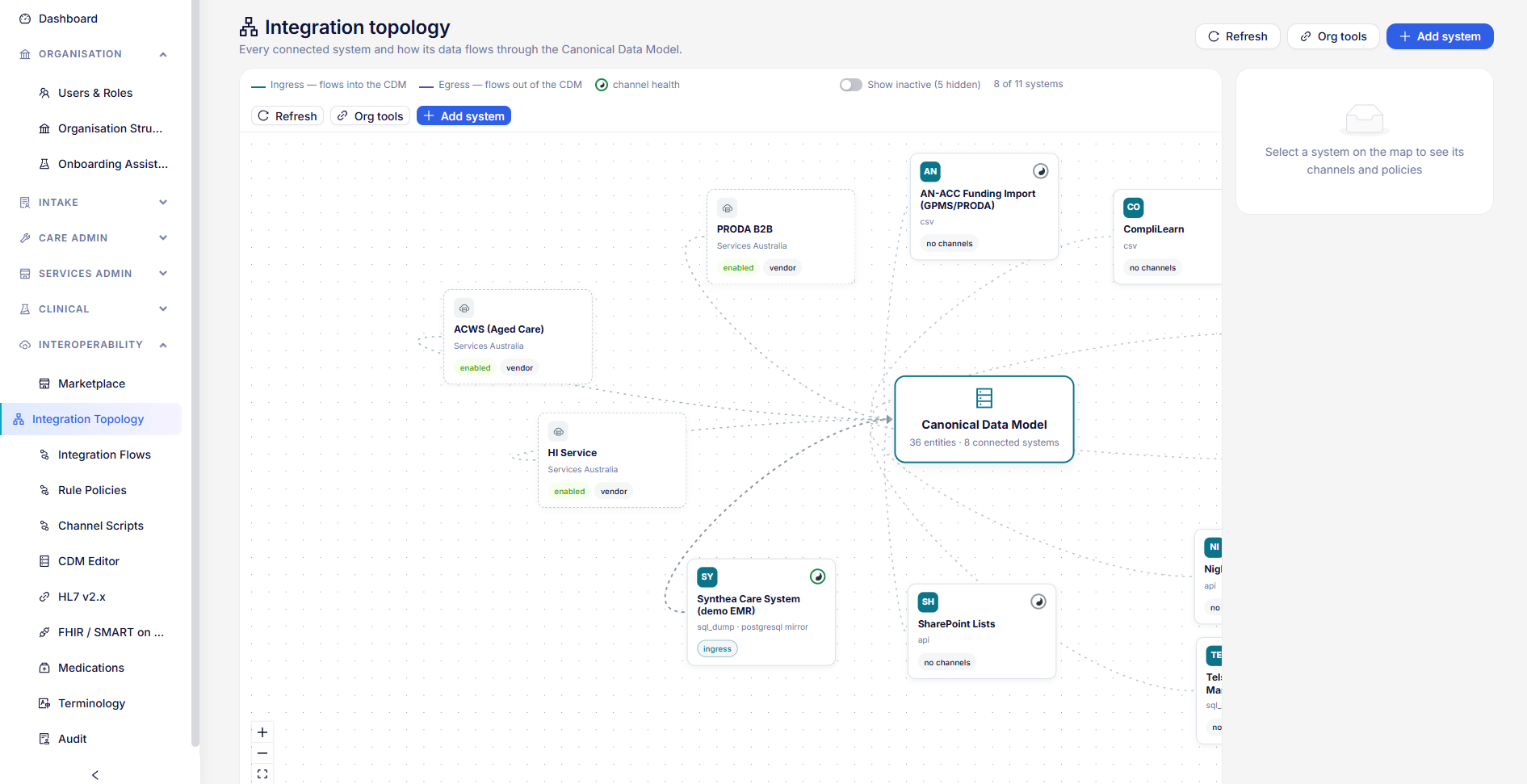
Keep what you run. We make it talk.
HealthOS sits under your existing systems and connects them to one record, then speaks directly to the government gateways your funding depends on.
See the whole platform
A six-and-a-half-minute screen recording of HealthOS, from the first referral to the claim.
6:31Pick your setting
What changes on the floor
Eligibility before you say yes
The ACWS lookup runs inside the referral, so the person's aged care approvals are on screen while you triage, not discovered after admission.
Consent the patient actually signs
The clerk issues a numbered estimate and sends it by email or SMS. The patient reads and signs it on their phone, and the consent lands on the pre-admission record.
Claims built from the episode
Eclipse claims are built from the episode already recorded and sent in batches you can follow, so nobody types the stay in twice.
Families order, the roster sees it
A family books a service from the catalogue in Connections, and it appears on the services schedule for the team who will deliver it.
One chart, wherever care happens
Staff, the worker app and the dispensing pharmacist read the same medication chart, so a change made in one place is the change everyone sees.
The board pack builds itself
Board measures roll up overnight from the records care staff already keep, and the pack arrives as a workbook on the morning you choose, finished instead of started in a spreadsheet.
See HealthOS on your own workflows
We'll walk you through it on real data. Bring the questions your current system can't answer.
Or email hello@healthos.net.au